Grizzly Giant Tree Health Assessment
In June 2026, Ancient Forest Society inspected the Grizzly Giant tree—a roughly 3,000-year-old giant sequoia at the heart of Yosemite’s Mariposa Grove.
The Grizzly Giant
Ancient Forest Society is honored to have been chosen by Yosemite National Park to complete this health assessment. Here are some fun facts about the Grizzly Giant:
Elevation: 5,700 ft / 1,735 m
Height: 208 ft / 63.5 m
Diameter at breast height: 25.4 ft / 7.74 m
Age: ~3,000 years
Wood volume: 31,501 cubic ft / 892 cubic m
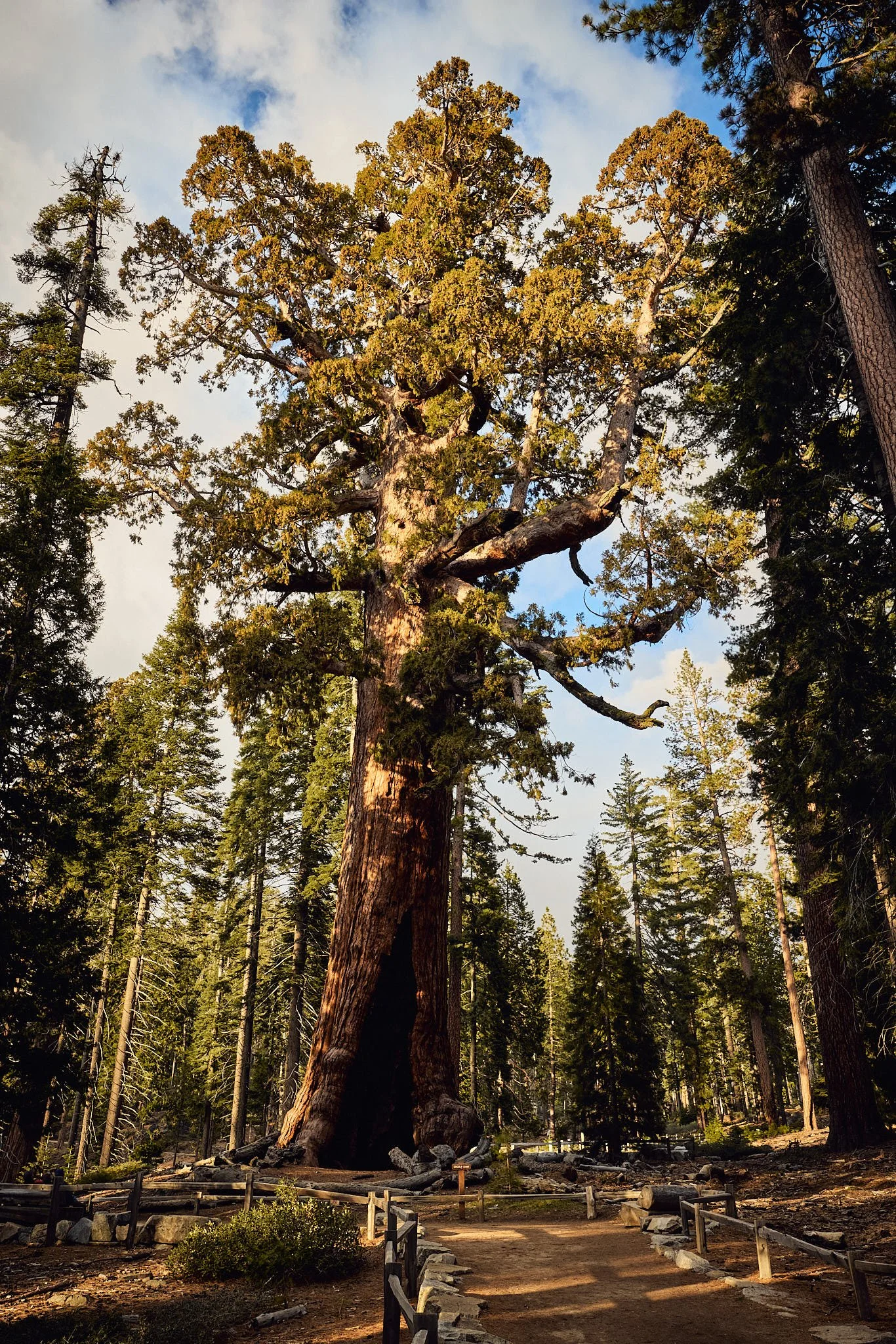
Ecological History of the Grizzly Giant
For nearly 3,000 years, the Grizzly Giant has stood at the center of Yosemite's Mariposa Grove, surviving droughts, storms, and countless wildfires. Giant sequoias evolved alongside frequent, low-intensity fire, which historically moved through these forests every few years. These fires cleared accumulated brush and small trees, recycled nutrients into the soil, and created the conditions giant sequoias need to regenerate.
Over the last century, widespread fire suppression allowed fuels to build up across many Sierra Nevada forests. As a result, wildfires have become larger and more severe than the giant sequoias evolved to withstand. Since 2015, severe wildfires have killed more than 17 percent of the world's mature giant sequoias, raising concerns about the future of these iconic trees.
At the same time, emerging research is helping explain why some giant sequoias survive intense fires while others do not. Studies are increasingly showing that a tree's history of exposure to low-intensity fire is one of the strongest predictors of its ability to withstand future wildfires. The findings reinforce knowledge that Traditionally Associated Tribes have carried for generations: regular cultural burning strengthens forest ecosystems and promotes resilience over the long term.
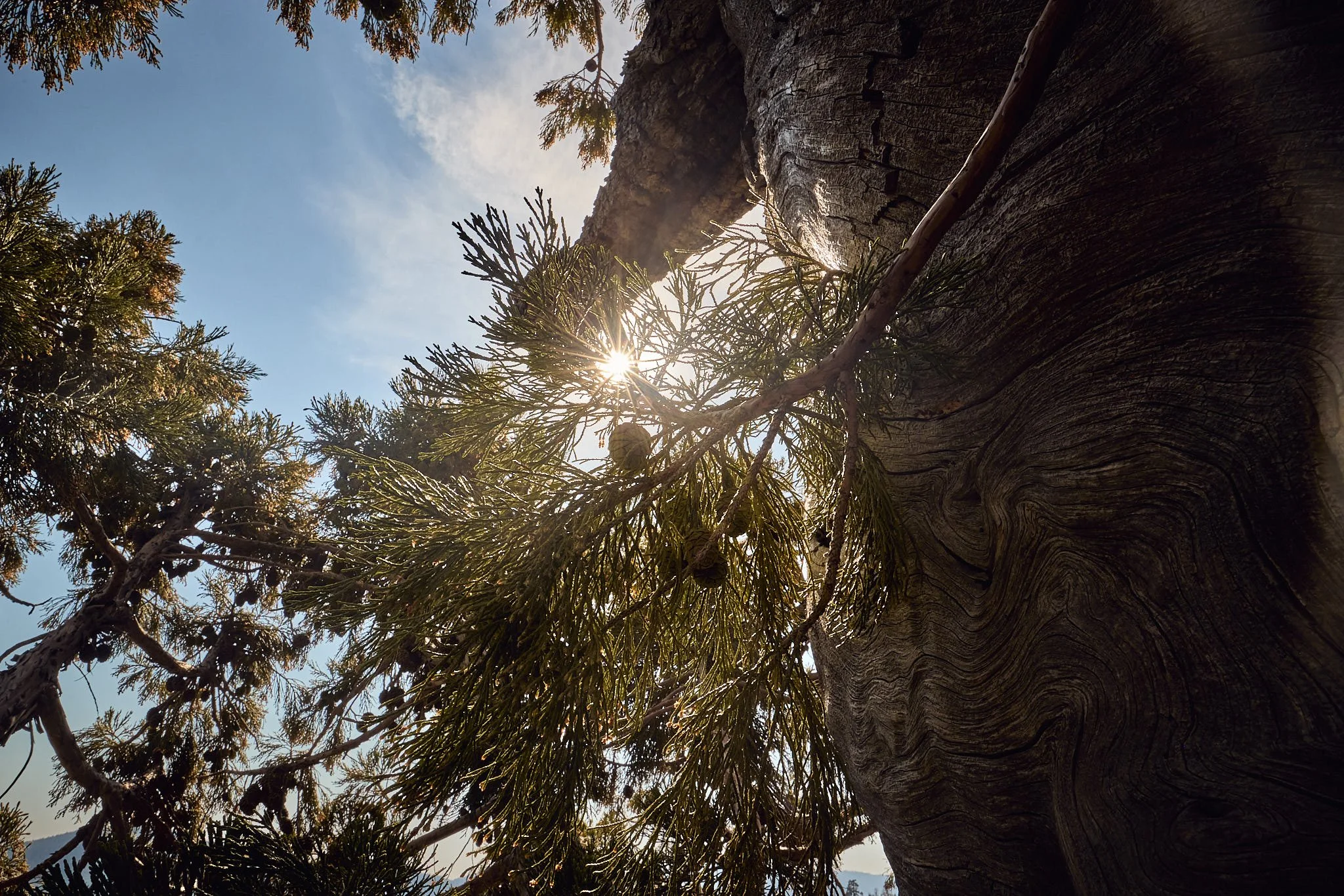
The New Direction of Giant Sequoia Management
In recent years, Yosemite National Park and its partners have taken major steps to restore those historic conditions in Mariposa Grove. Fuels reduction work removed thousands of tons of accumulated vegetation and hazard trees, while partnerships with Tribal practitioners are helping reintroduce cultural burning to the landscape. Together, these efforts are part of a broader strategy to ensure that giant sequoias like the Grizzly Giant continue to thrive in an era of increasing wildfire activity.
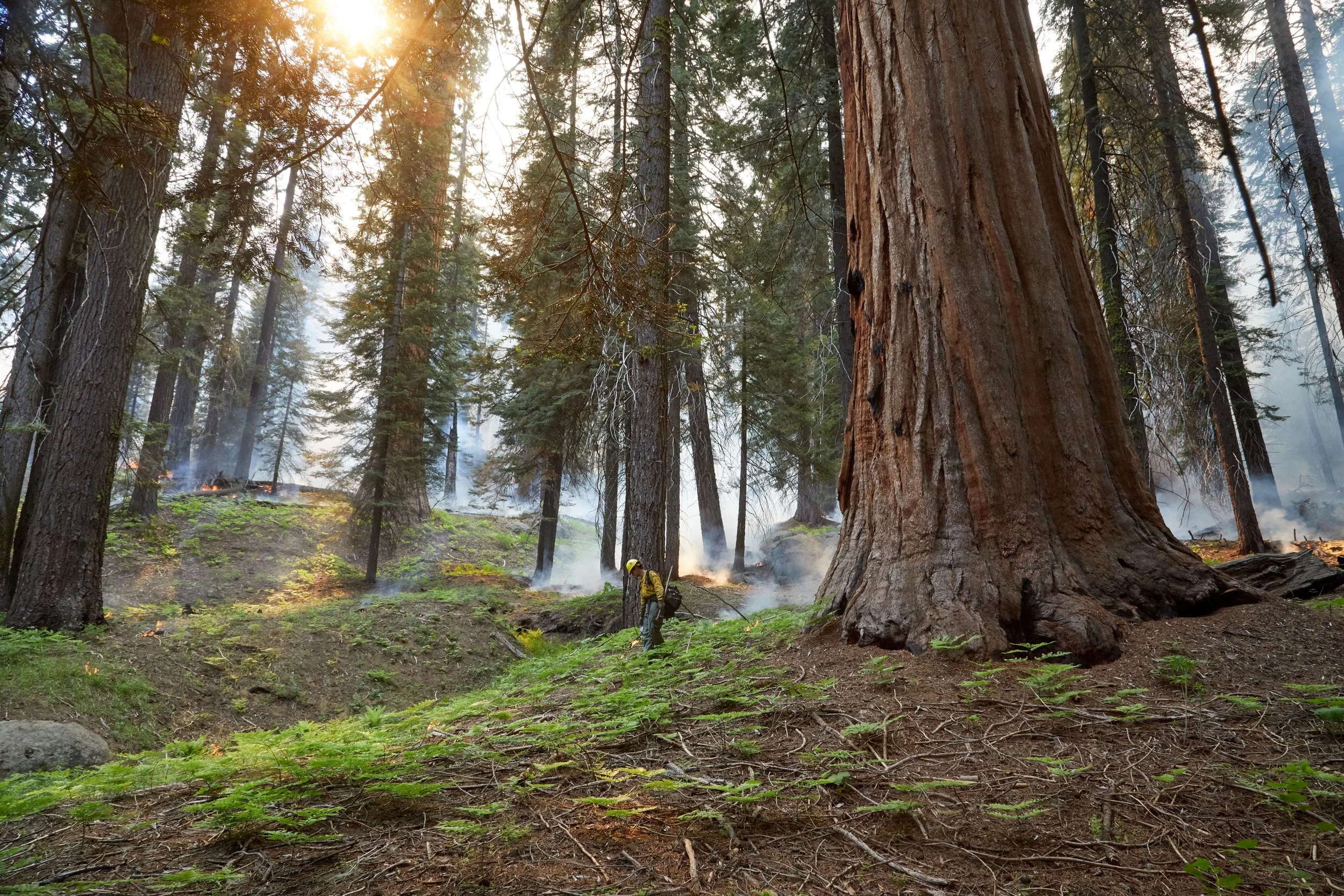
The Health Inspection
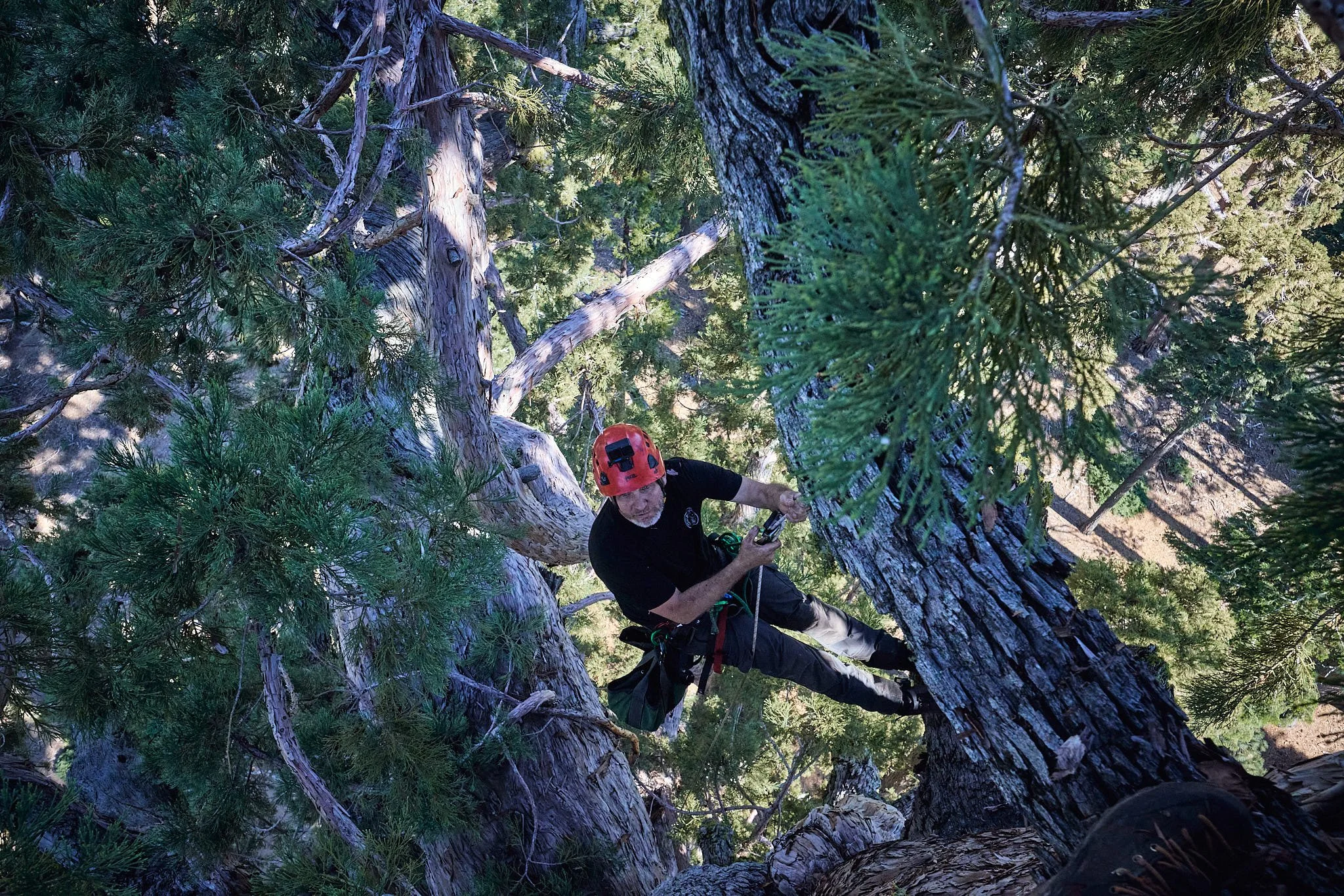
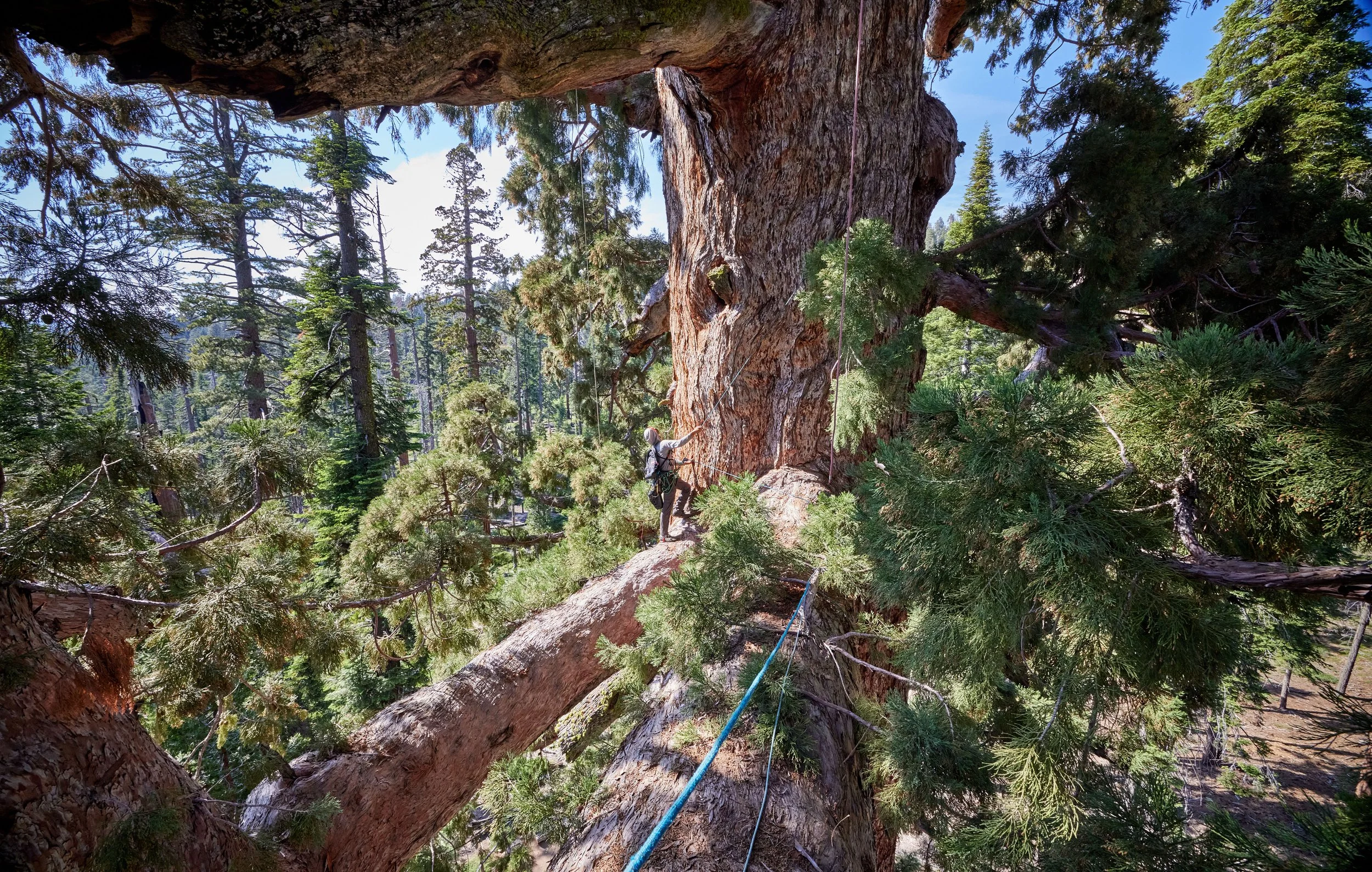
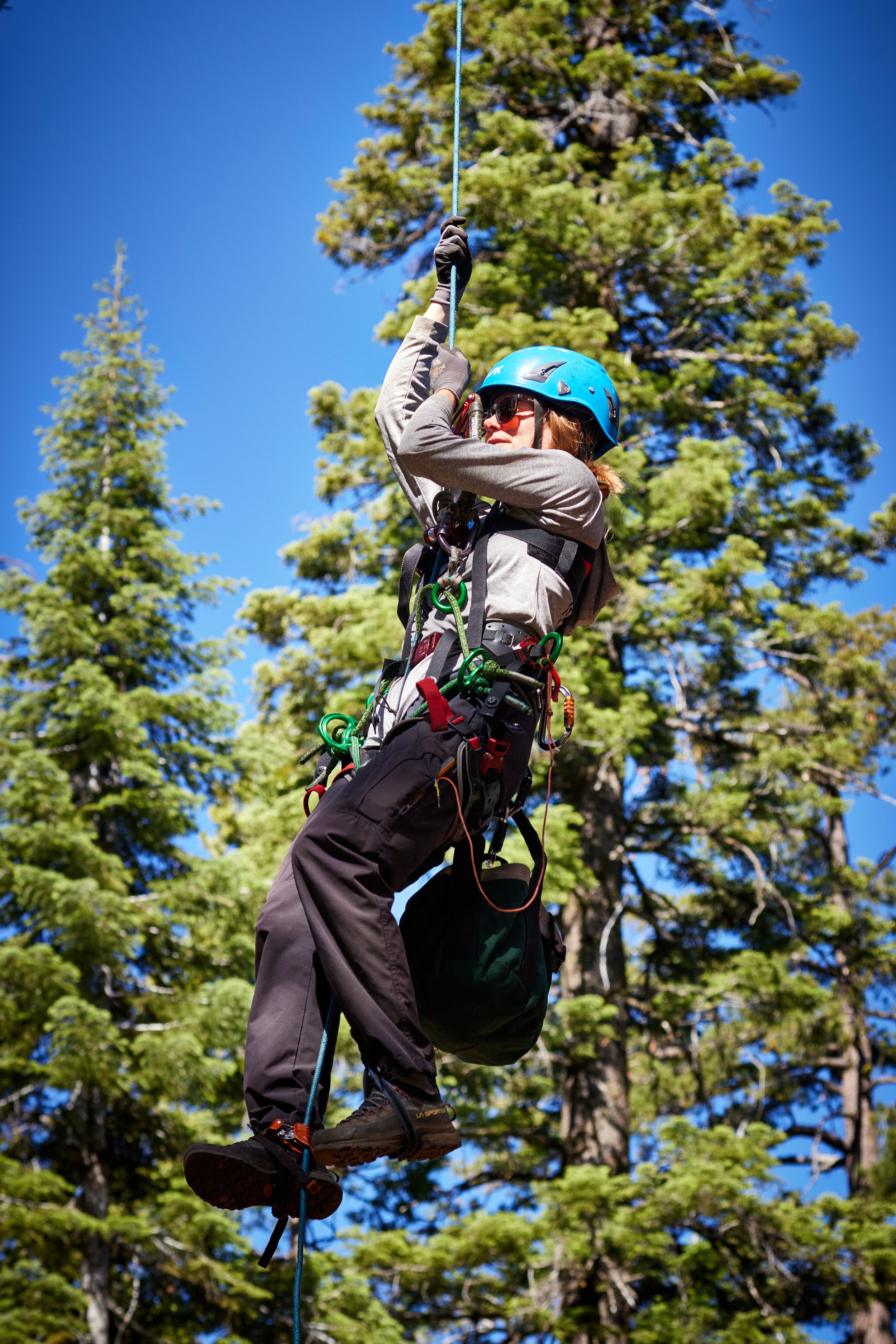
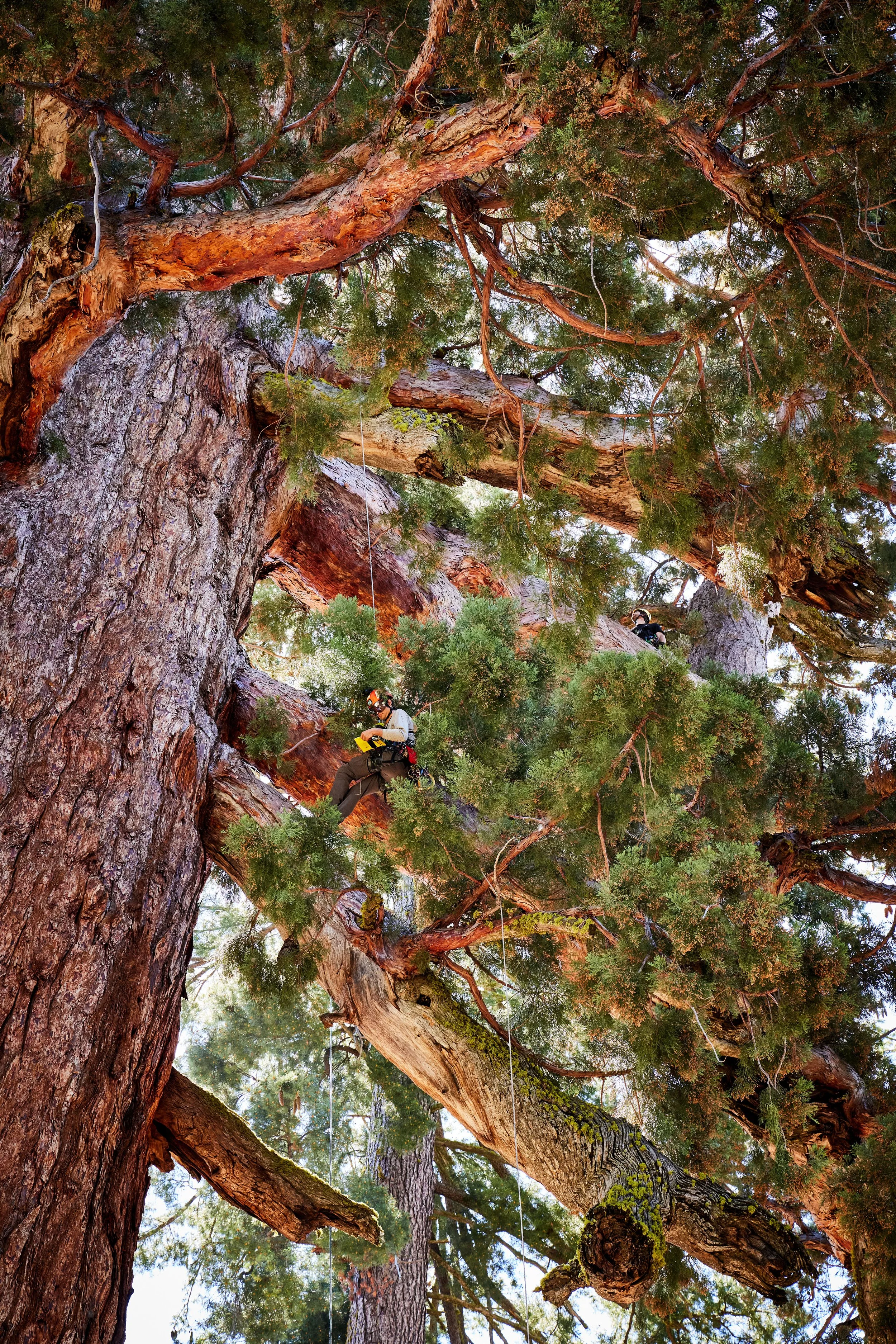
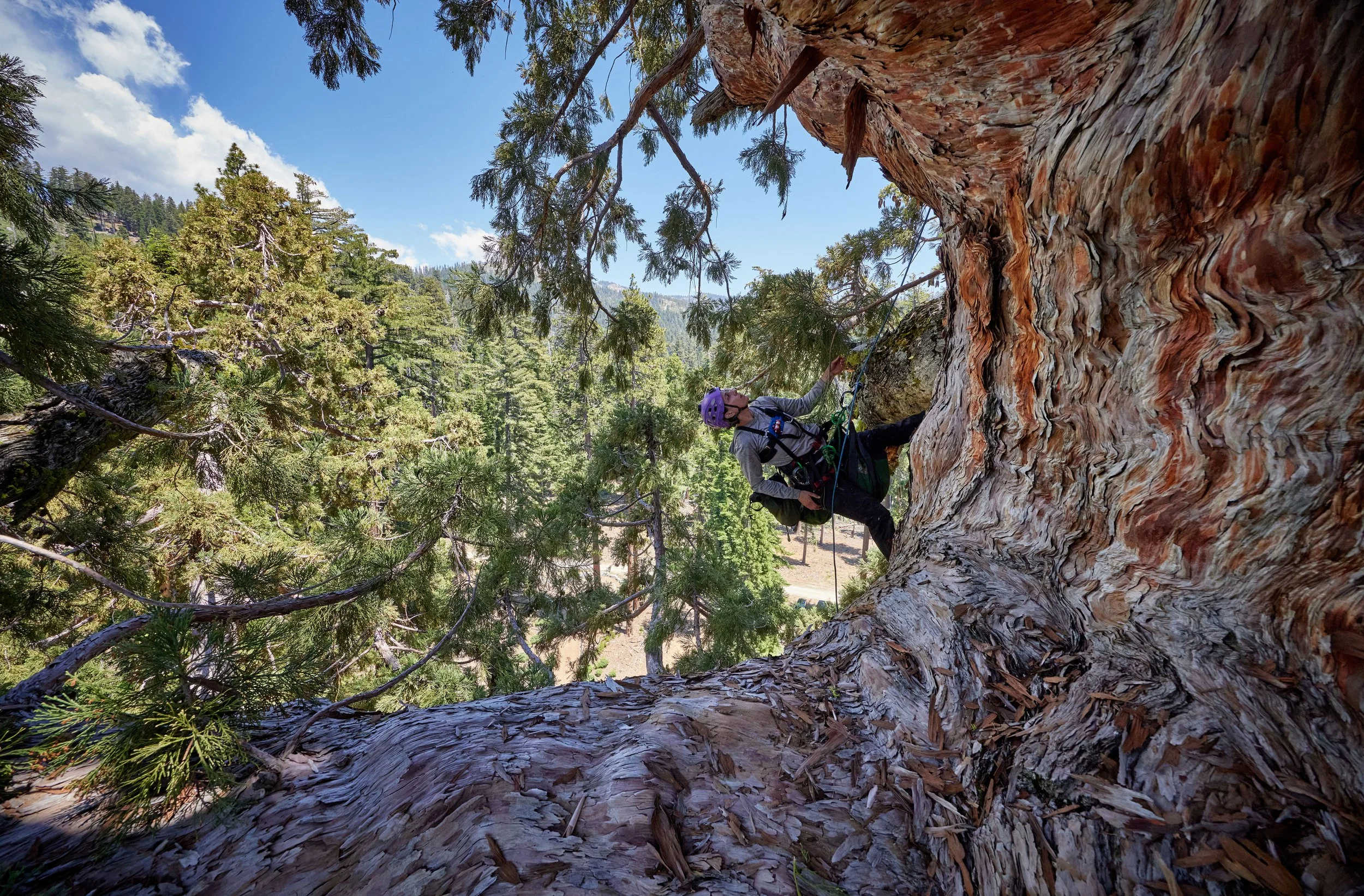
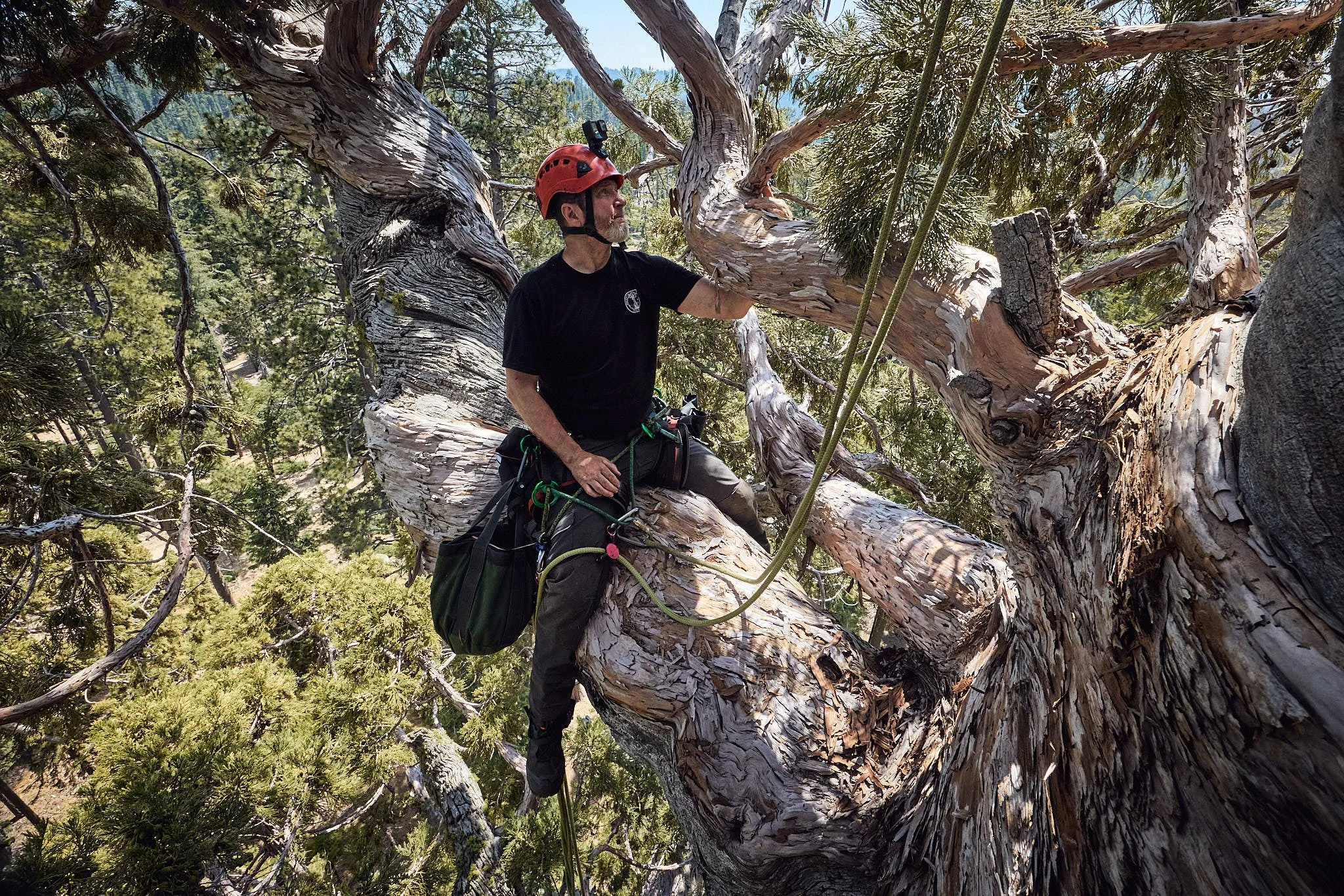
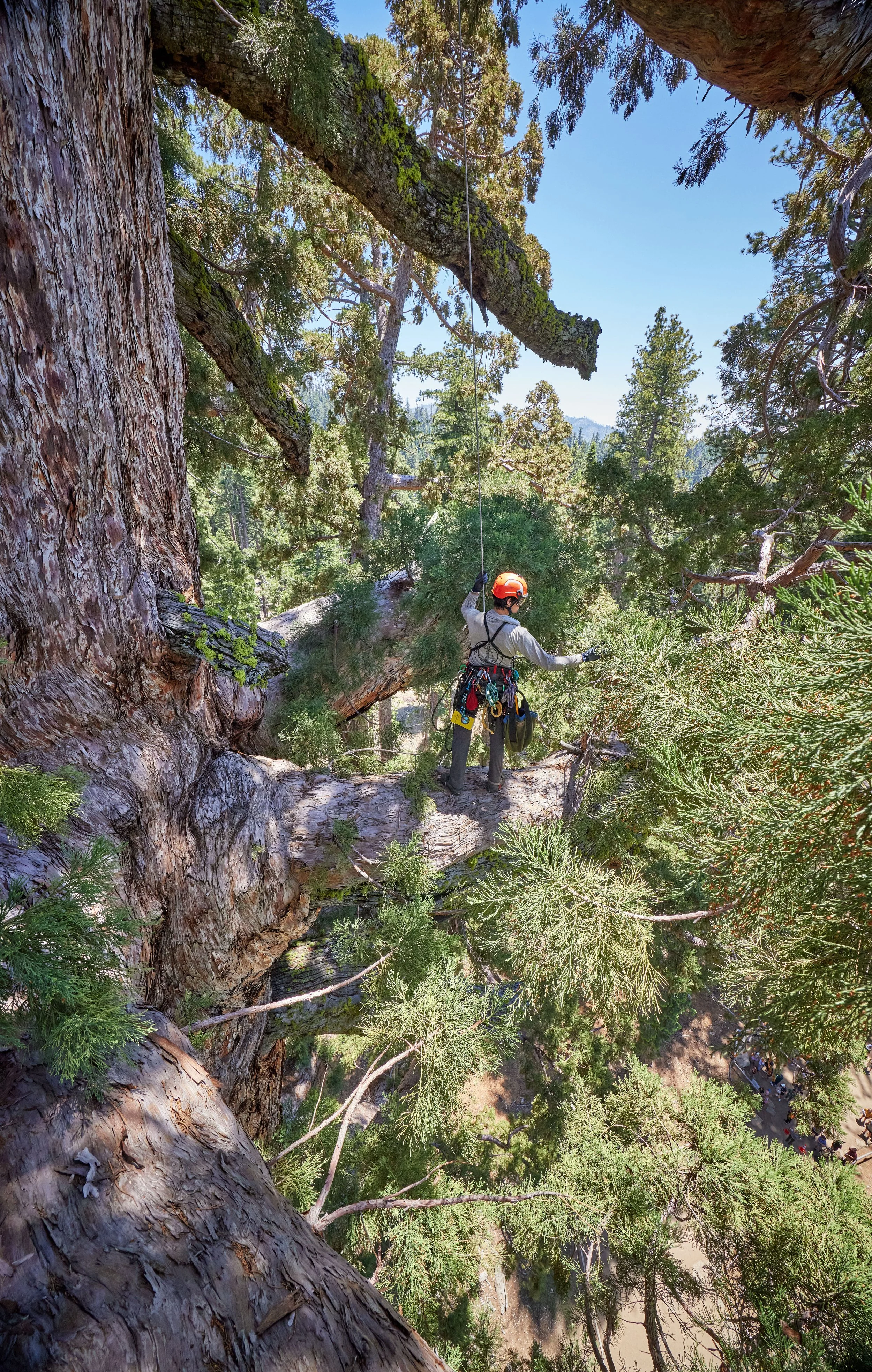
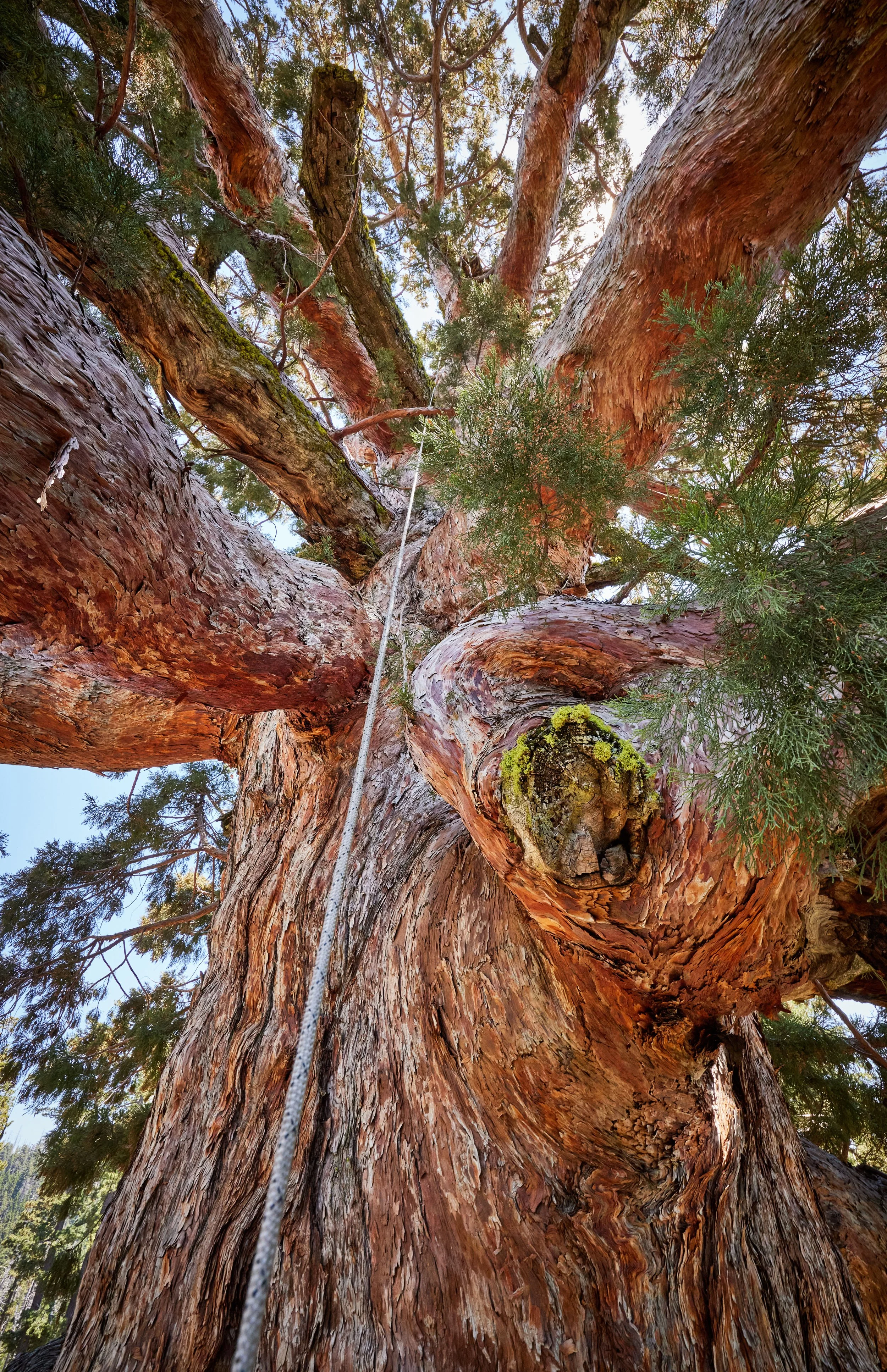
On June 17, 2026, Ancient Forest Society conducted an assessment of the Grizzly Giant's crown in partnership with Yosemite National Park, Yosemite Conservancy and the Southern Sierra Miwuk Nation. Over the course of the assessment, researchers examined the tree from the ground up to the uppermost branches, documenting indicators of overall health and resilience. They assessed basal fire damage, treetop water status, cone production and bark beetle activity. While native bark beetles are a natural part of giant sequoia ecosystems, stressed trees can become more vulnerable to attack.
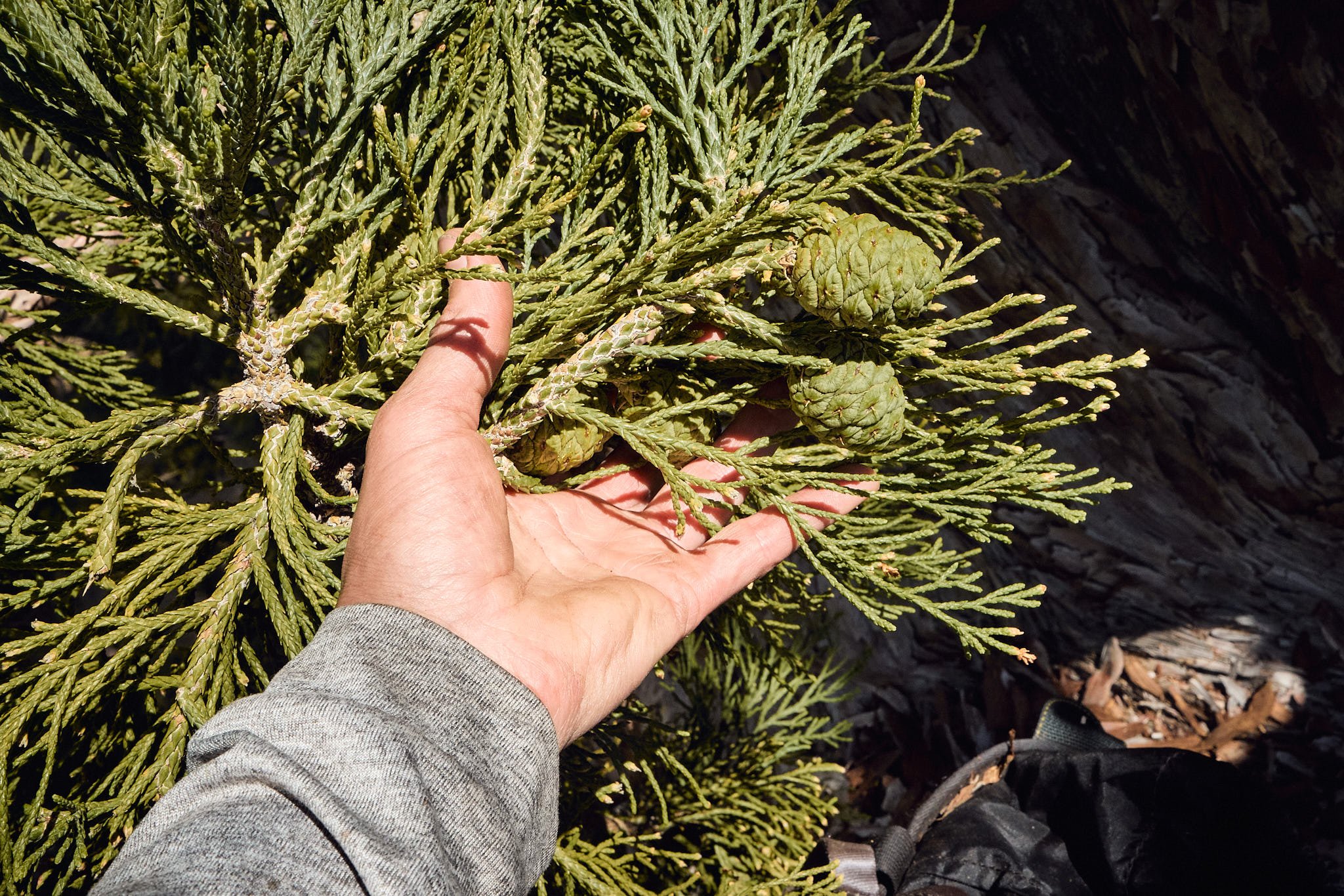
While marveling at the grandeur of the Grizzly Giant from within its crown, the team also found three epiphytic plants growing on the trunk: two sugar pines and one California hazelnut. There was also a deep cavity in the trunk that a family of Douglas squirrels was hunkered down in.
Scientists Report Back After the Climb
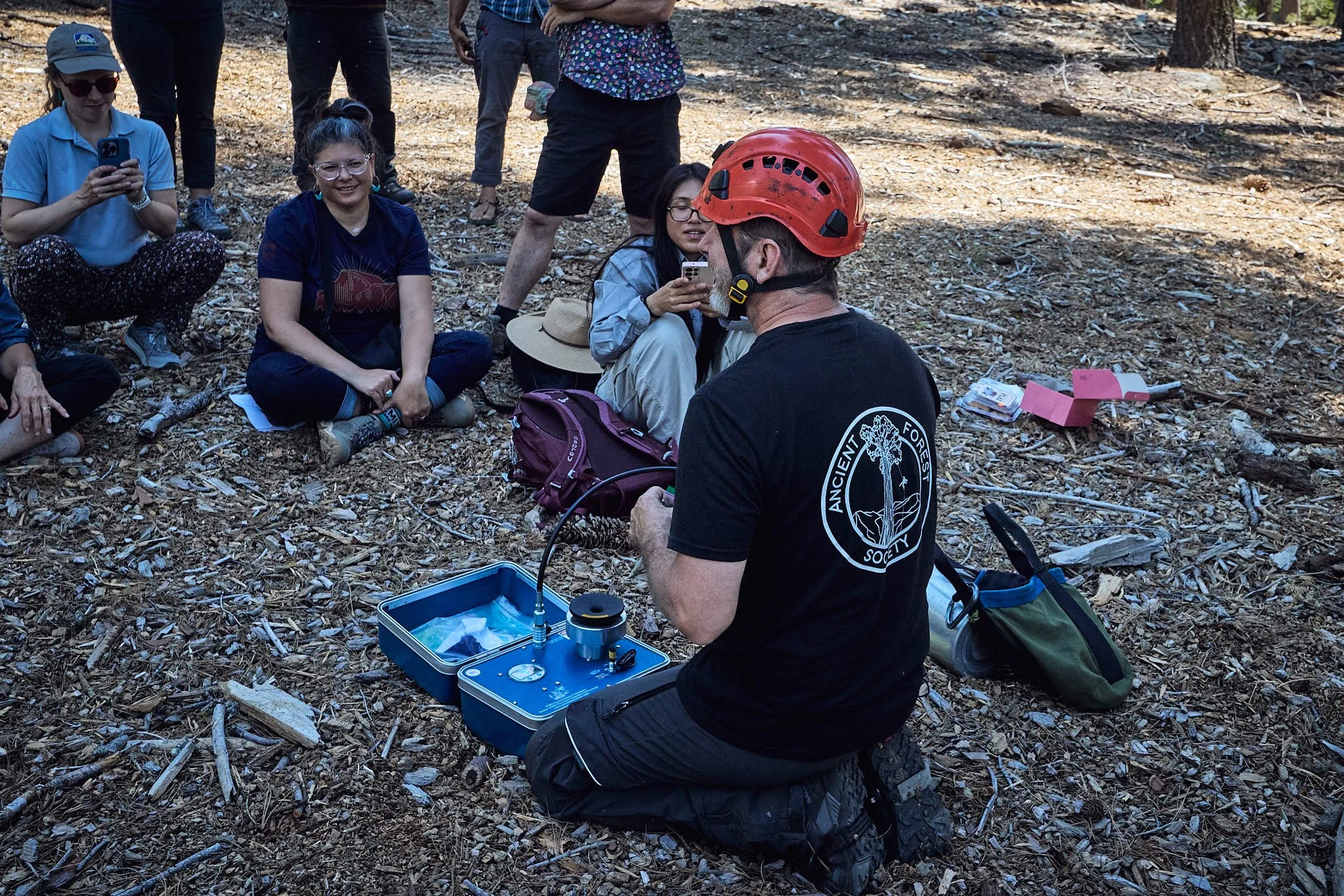
The health inspection provided a rare opportunity to directly observe how one of the world's most famous trees is responding to changing environmental conditions and recent forest restoration efforts. By examining the tree crown up close, researchers were able to inspect for subtle indicators of health that are impossible to see from the ground. The inspection indicated that the Grizzly Giant is not water stressed and while it has old historic basal fire damage, it’s not enough to limit water transport to the thriving crown. There were both immature and mature cones present, indicating that the Grizzly Giant continues to be reproductive. While there were attempted adult bark beetle entry holes throughout the crown, the Grizzly Giant appears to be successfully defending itself from beetle attack, indicating that it has not seen any significant negative health impacts from recent drought or forest restoration activities completed in the grove in 2025. If you would like to learn more, the link to the full report is below.
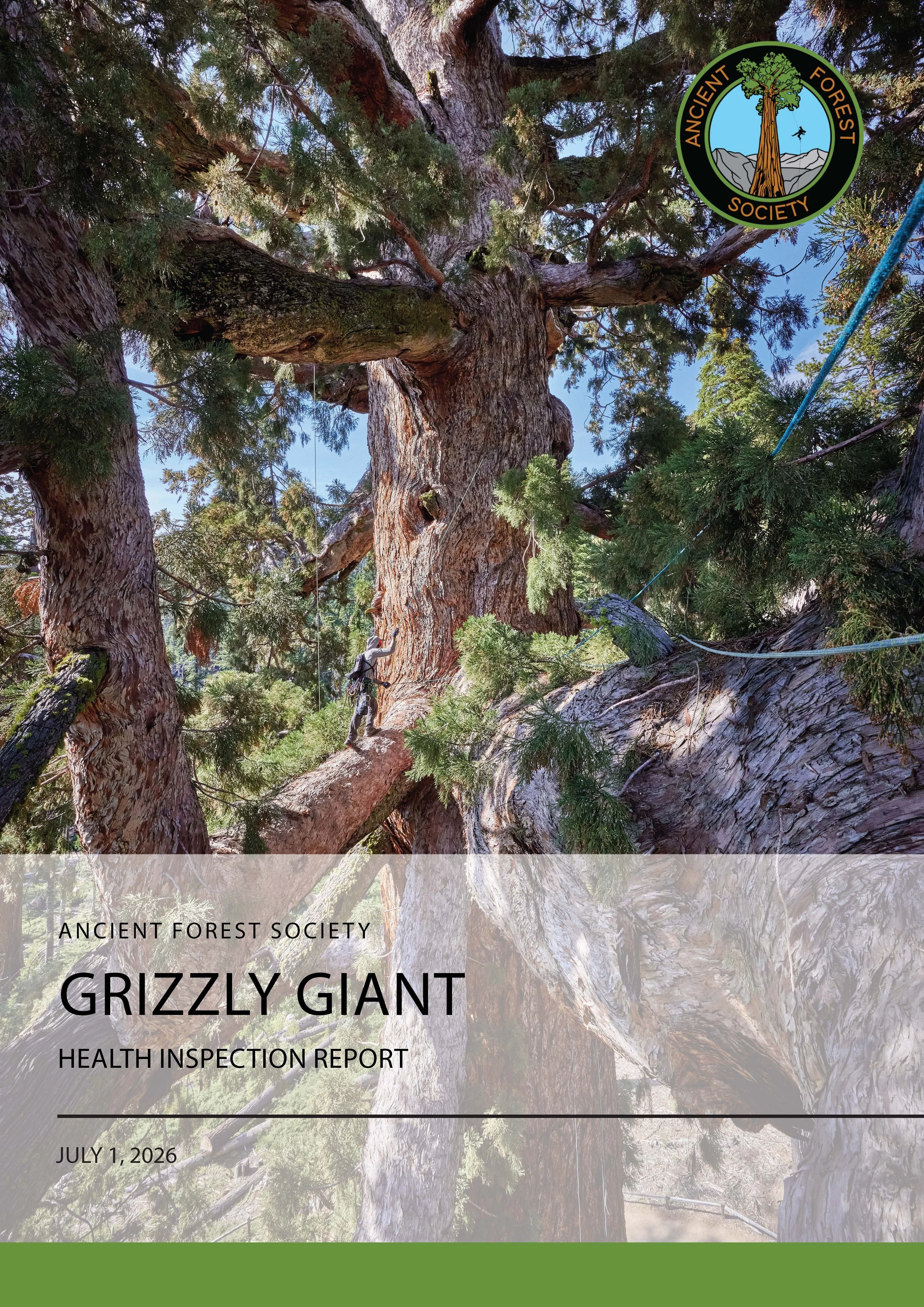
Curious to learn more? See the full report below.
Wisdom of the Grizzly Giant
The Grizzly Giant has endured for nearly three millennia because it is exceptionally resilient. The purpose of this assessment was to not only document the condition of a single tree, but also to better understand the characteristics that allow giant sequoias to survive in a changing world. As scientists, land managers, and Tribal communities work together to restore fire-resilient forests across the Sierra Nevada, the Grizzly Giant stands as both a symbol of that effort and a living reminder of what is at stake.
In the Media
The event was covered by our partners and several news outlets. Follow the links below to check out the story from their perspectives!
Yosemite Conservancy: The Grizzly Giant Gets a Health Checkup
SF Gate, July 26, 2026: Scientists have climbed Yosemite’s most famous tree
Gear Junkie, July 7, 2026: This Legendary Yosemite Tree Has a Designated Doctor: Here’s How Its Checkup Went
Active NorCal, July 7, 2026: Crews Are Checking the Pulse of One of Yosemite’s Oldest Sequoias
Sierra Sun Times, July 6, 2026: Yosemite National Park Partnered with Ancient Forest Society to Check the Health of the Grizzly Giant Sequoia
Your Central Valley (KSEE/KGPE), June 17, 2026: Conservationists inspect the health of a giant sequoia in Yosemite amidst bark beetle attacks.
The Mariposa Gazette, June 25, 2026: A ‘Giant’ undertaking. Researchers scale famed sequoia for checkup.
Partners and Funders