

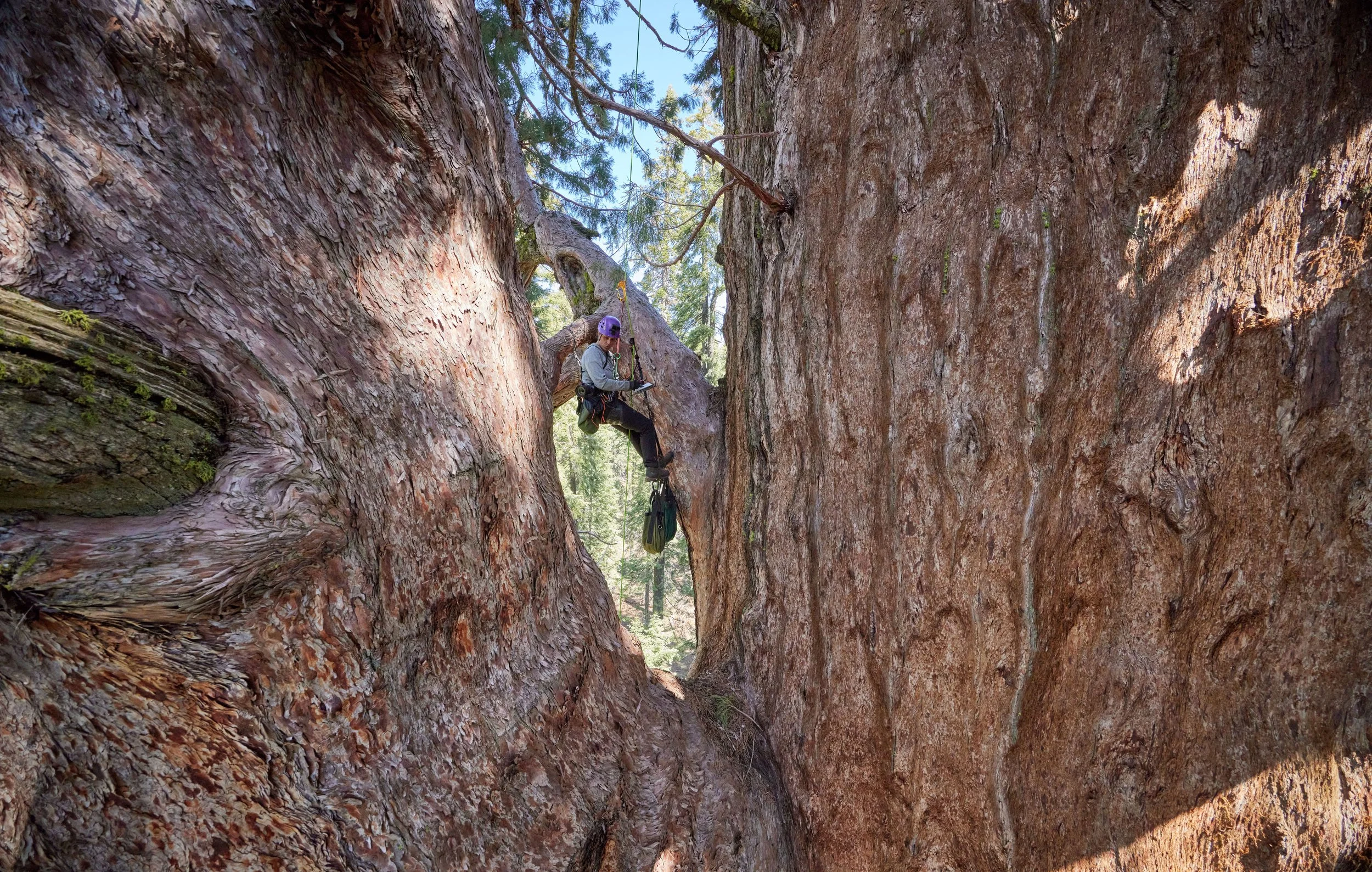
General Sherman Tree Health Inspection
In 2024, Ancient Forest Society climbed the General Sherman tree to inspect it for bark beetle activity and assess its general health.
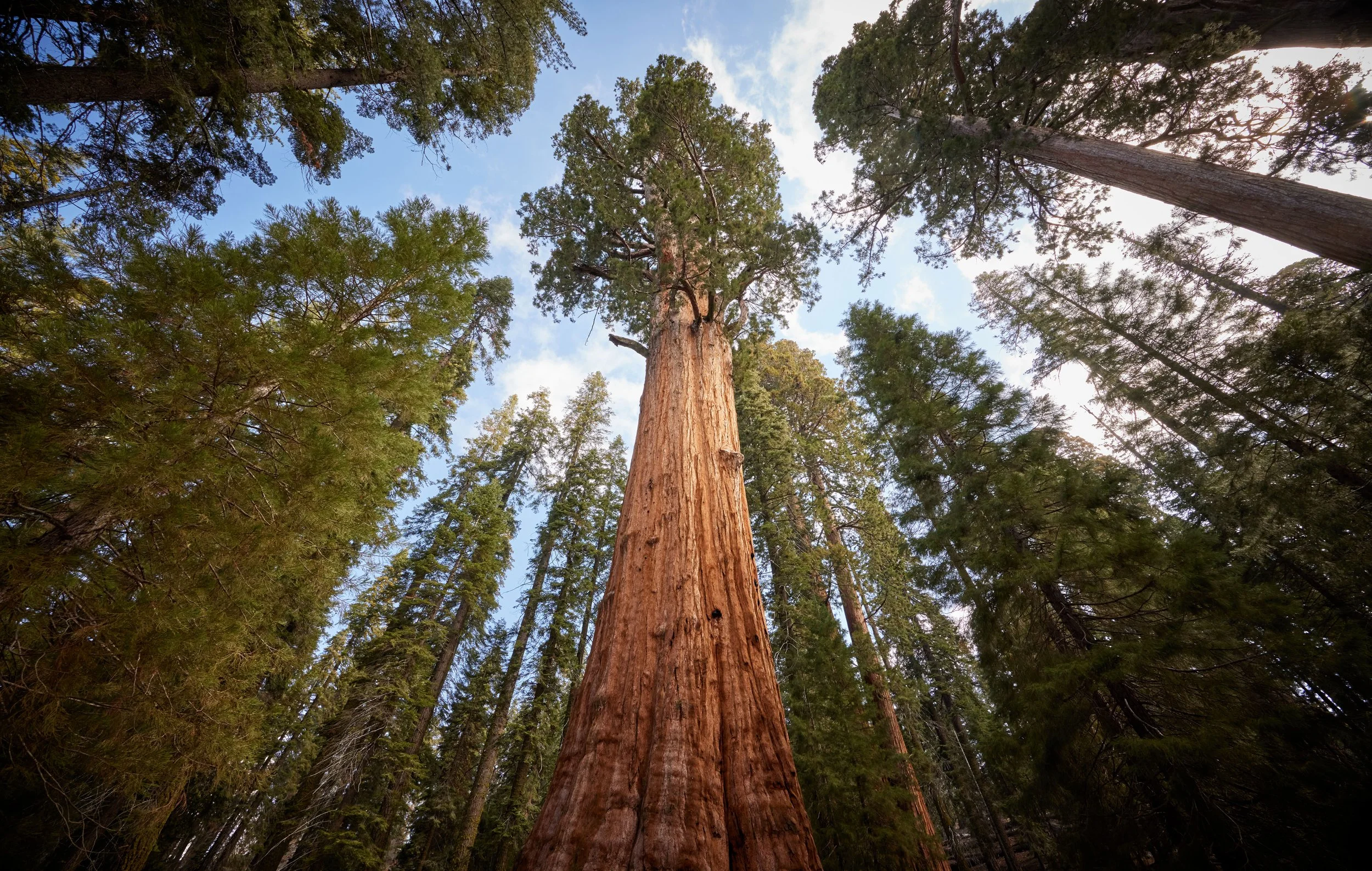
General Sherman
The General Sherman is the largest tree on Earth by wood volume. It is located in Giant Forest in Sequoia National Park and is visited by over a million people from around the world each year. Here are some quick statistics about this ancient monarch:
Elevation: 6,919 ft / 2109 m
Height: 275 ft / 83.8 m
Diameter at breast height: 21.7 ft / 6.61 m
Age: ~2,200 years
Wood volume: 55,040 cubic ft / 1559 cubic m
Weight: 641 tons
The Bark Beetle Situation
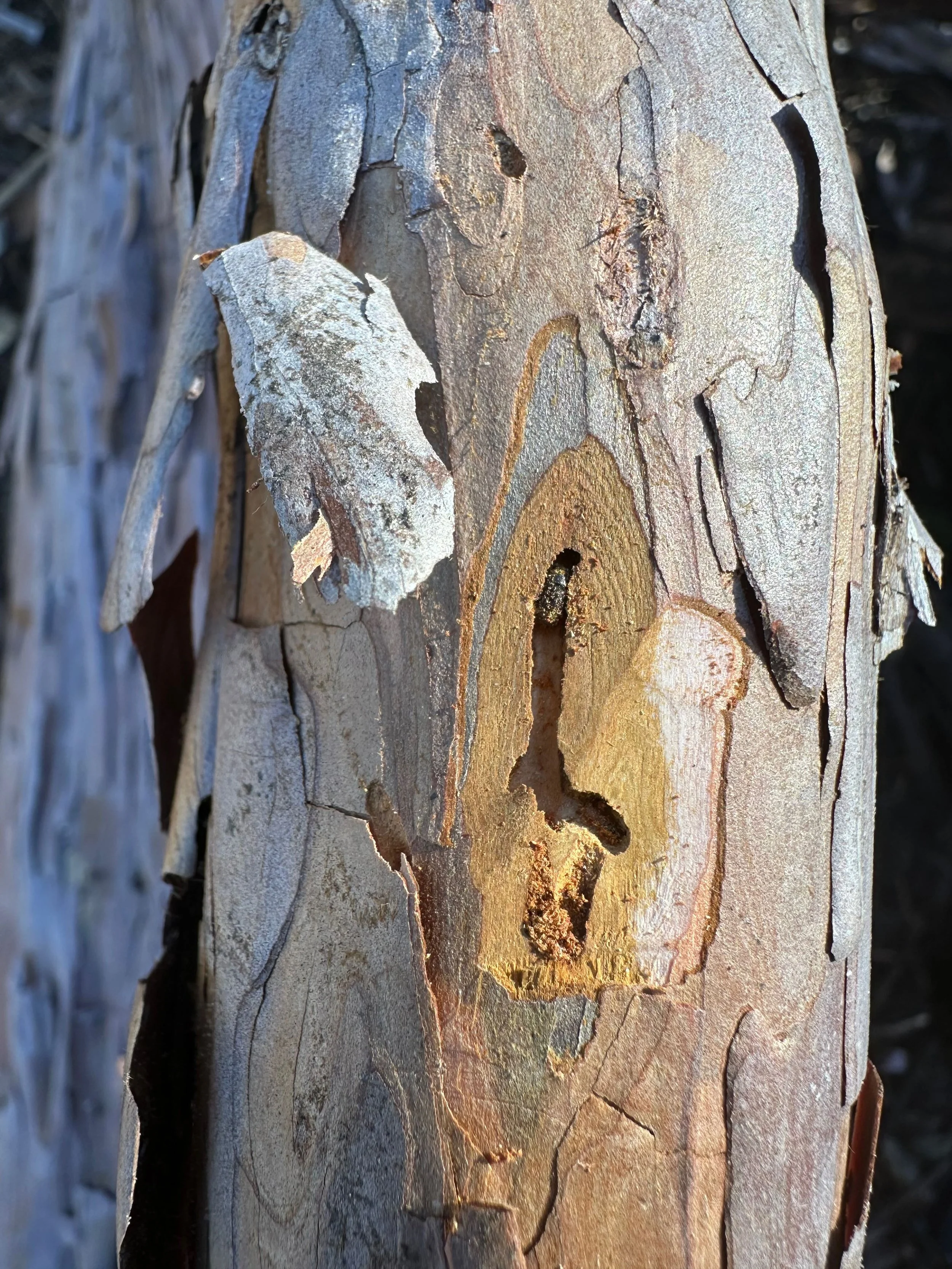
Giant sequoia bark beetles (Phloeosinus punctatus) are native to California and feed on phloem sap in trees. This liquid contains nutrients and hormones generated through photosynthesis in the tree’s leaves. Giant sequoias are generally able to fend beetles off by exuding large amounts of the sticky sap to plug the beetles’ entrance holes and prevent entry into the pholem, a process known as a “pitch response.”
When trees are stressed from conditions such as multi-year droughts or overly-intense fires, they are no longer able to repel their attackers, and they can succumb to beetle infestations. The multi-year drought of the past decade, in combination with intense fires, is a vivid example. Many giant sequoias were no longer able to access water supplies they’d long relied upon; therefore, they were no longer able to generate enough pitch to close the beetle bore holes. This allowed the beetles to freely enter under the dead outer bark and reproduce there.
In 2017, researchers started seeing a small number giant sequoia trees in Sequoia National Park and other areas die from the combination of drought, fire, and bark beetle attack. When more giant sequoias started dying in subsequent years, the National Park Service could not ignore the threat. They could not risk harm to such a globally-important tree as the General Sherman, so they brought in Ancient Forest Society (AFS) to inspect it for damage from bark beetles and assess it’s overall health.
The inspection required two days for a four-person research team from AFS to complete. Once all four researchers were in the canopy, they began their inspection, with each researcher covering certain parts of the tree. The General Sherman has extremely large branches that grow outward and then eventually upward within its crown. Each of these branches, the size of a large tree itself, needed to be inspected.
The AFS team looked for five signs of beetle damage when performing the inspection.
Entrance holes created by adult beetles into the bark. These are at an oblique angle.
Exit holes created by the larvae. These holes are often perpendicular to the surface of the branch or trunk.
The presence of sawdust from beetles burrowing into the tree.
Beetle frass (insect poop).
Globs of pitch or sap that the tree has exuded to close off the holes.
While the four AFS researchers were inspecting the General Sherman tree’s crown, pilots with the U.S. Forest Service and National Park Service flew a drone with a powerful camera that could zoom in on the tiny bark beetle entrance holes pointed out by the researchers.
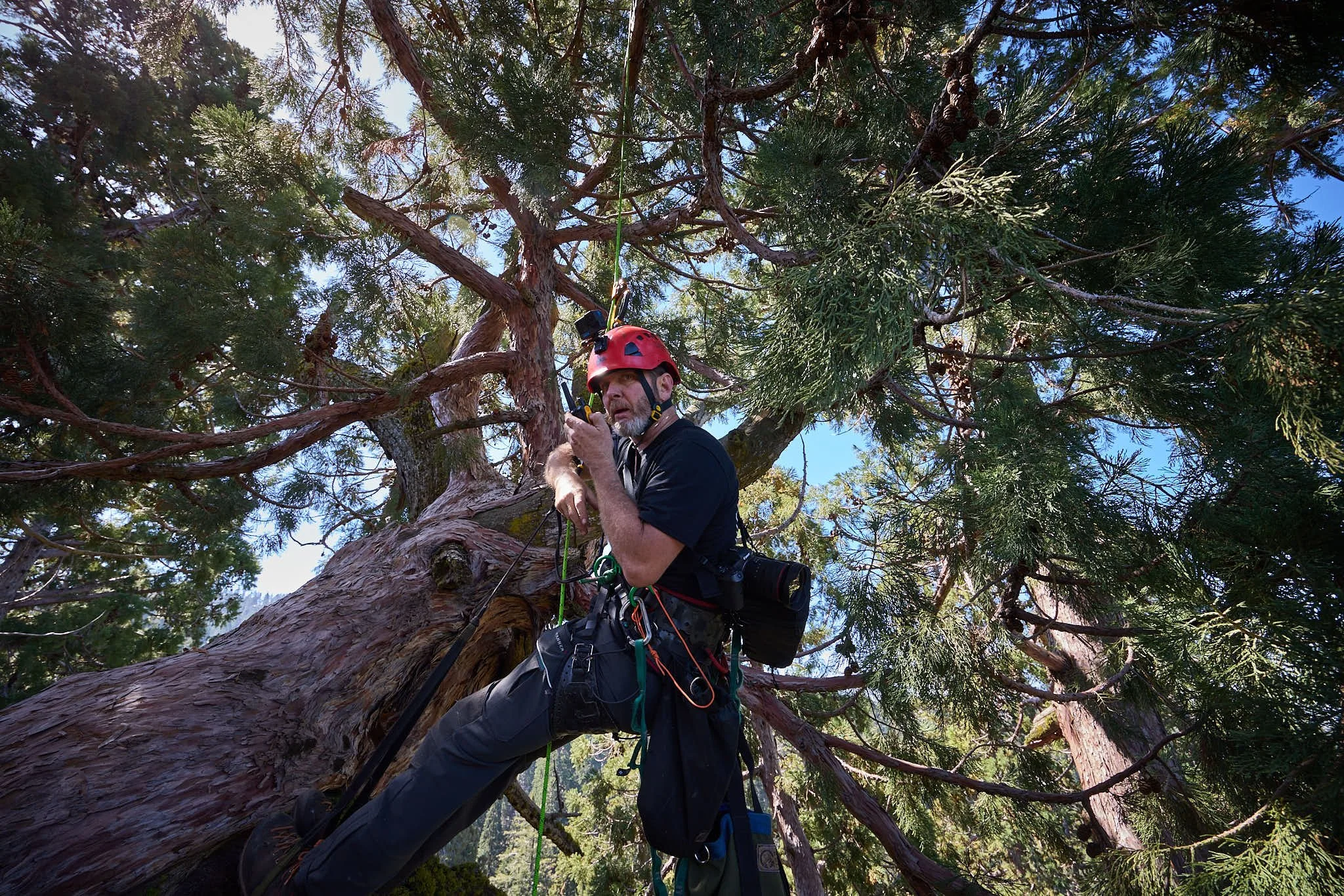
During the inspection, the researchers reported their findings on a radio to help guide the drone operators to photograph specific locations within the canopy. The ability of the drone to successfully identify bark-beetle activity on branches in the canopy means a new and vital tool has been added to the tree management toolbox.
The Inspection
The Scientists Report Back After the Climb
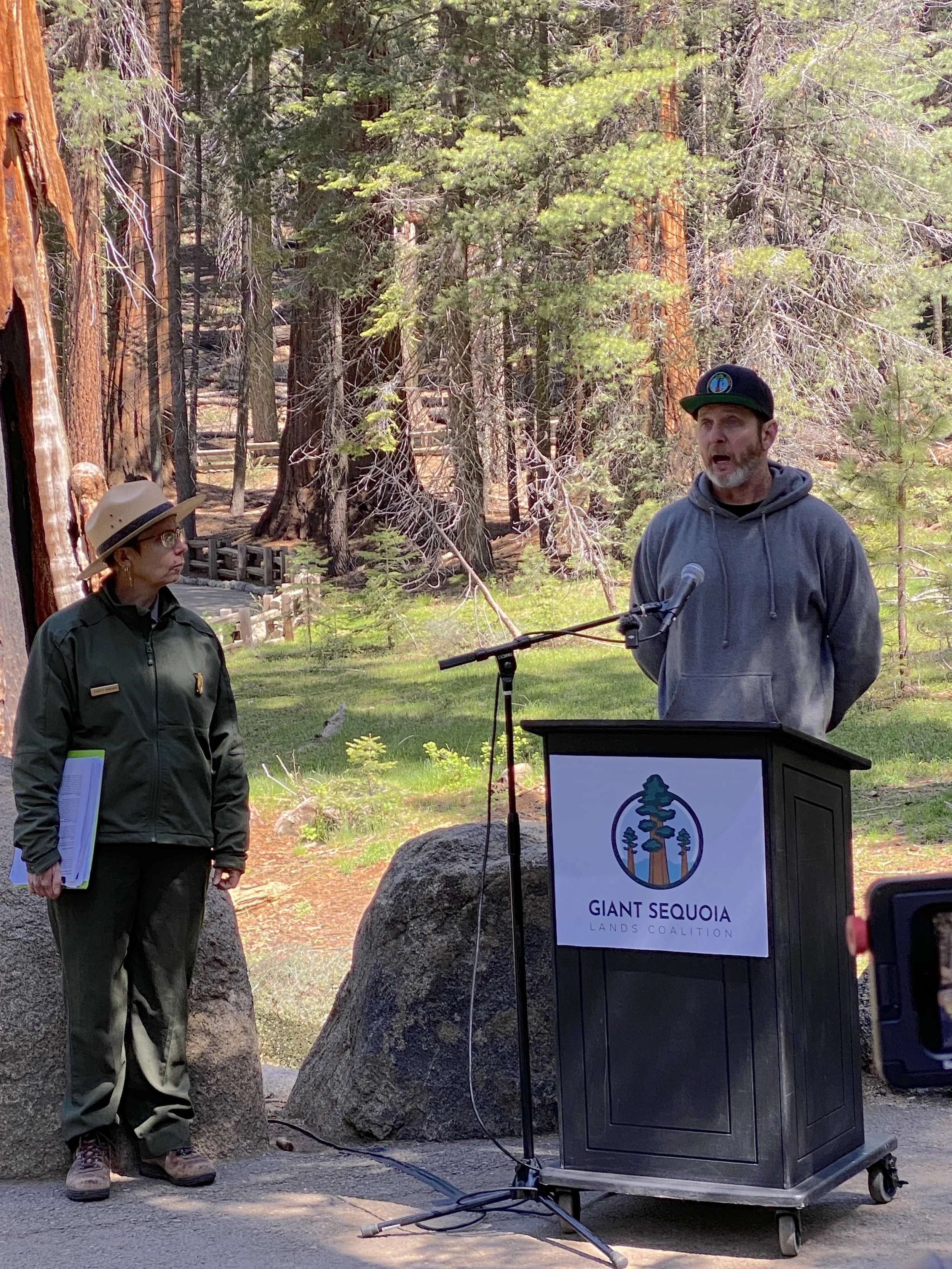
AFS Executive Director Anthony Ambrose, who led the inspection and was the first person to ever climb the General Sherman, shared his observations after the climb. “I have good news to report. There does appear to be some level of beetle activity in the General Sherman tree, which is not surprising. …The adult beetles that are trying to burrow into the bark don’t seem to be making it very deep into the bark. And in some cases where they do get down into the live bark, the tree seems to pitch them out. Overall, there don’t seem to be any impacts to the tree. It seems to be successfully fending them off. The tree seems to be very vigorous; the foliage is very healthy.”
In the Media
The event was covered by several local and national news outlets. Follow the links below to check out the story from their perspective!
Tahoe Daily Tribune, May 28, 2024: South Tahoe based science group is first to climb the largest tree in the world
LA Times, May 25, 2024: In the land of giant sequoias, the largest tree in the world gets a checkup
AP News, May 23, 2024: General Sherman passes health check but world’s largest trees face growing climate threats
San Francisco Chronicle, May 20, 2024: California’s General Sherman, world’s largest tree, just got a health check. Here’s what scientists saw