|
Ancient Forest Society From Root to Canopy: How Water Fuels Giant Sequoias by Taylor Sheriff In the Northern hemisphere, July is typically the hottest month of the year. As we enjoy the outdoors and s
From Root to Canopy: How Water Fuels Giant Sequoiasby Taylor Sheriff In the Northern hemisphere, July is typically the hottest month of the year. As we enjoy the outdoors and soak up the sun during this part of the summer, we know how important it is to stay hydrated and drink plenty of water. But have you ever wondered how important this might also be for a tree, especially one as big as a giant sequoia (Sequoiadendron giganteum)? Giant sequoias can easily reach heights of over 200 feet. More impressively, the base of their trunks can grow to be over 100 feet around. So as you might imagine, they need enormous amounts of water during the growing season - about 500-1,000 gallons per tree each day! As a comparison, humans only need about one gallon a day. These towering giants need large amounts of water to maintain many life-sustaining processes, like growing new foliage and new layers of woody tissues, and defending against pathogens and insects. As temperatures rise outside, this also tends to increase the rate of water loss from plants and the soil. So just like people, these massive trees need even more water during the summertime.
|
|
|
Cameron Williams ascending the General Sherman, the largest living tree on Earth. Photo by Wendy Baxter. |
|
|
How exactly do giant sequoias move water all the way from their roots to their uppermost leaves? They first absorb water through their large root systems embedded in the soil. Water is then transported up the stem through a network of tube-like cells called xylem to where they are needed in the tree. The water’s final destination is the leaves, which are the active site of photosynthesis. Photosynthesis is the process in which plants take light and carbon dioxide to create new sugars (plant food) and oxygen. Water must be used for this process to happen, though. During photosynthesis, carbon dioxide is absorbed through tiny openings in the leaves called stomata. Inadvertently, water vapor escapes when the stomata open. This loss of water from the leaves is called ‘transpiration,’ and is in fact the main driving force in pulling water up the stem of the tree. Hotter temperatures and drier conditions can put a great deal of strain on this water transport system. An increase in temperature can first dry out the soil, leading to less moisture available for trees. In an effort to conserve water, the tree will close its stomata and halt the process of photosynthesis. If too much water is lost through the leaves, it can also put a great deal of strain on the network of cells responsible for transporting water through the stem as it fights against friction and gravity. Under too much tension, created through hotter temperatures and less soil water, this network can fail, collapse, and lead to a myriad of problems for the tree, including death.
|
|
|
An AFS team member measuring the water status of a giant sequoia tree using a pressure chamber. Photo by Wendy Baxter. |
|
|
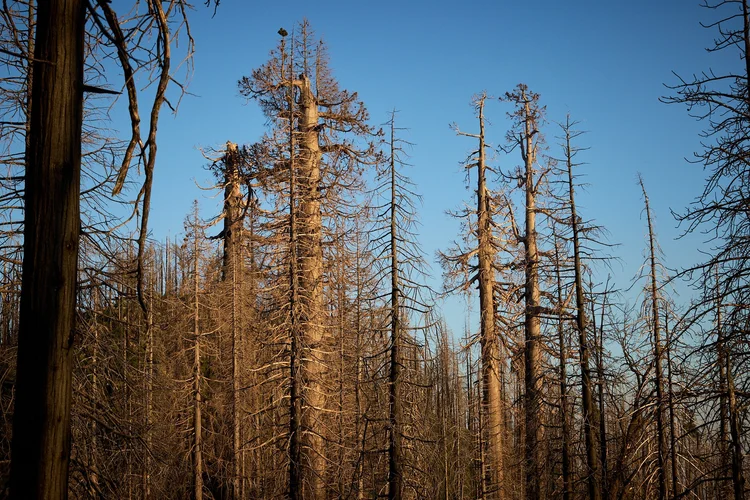
Giant sequoias, known for their longevity, are adapted to withstand the heat of summer and have lived through periods of occasional drought. Global climate change, however, has created more challenging conditions for these ancient trees. Winter snowpack that typically melts in the spring is a vital source of water for giant sequoias. However, with a rise in global temperatures, snow levels have declined and the snowpack is melting earlier, depriving sequoias of this critical resource. Hotter and more prolonged droughts further dry out the soil and surrounding vegetation, increasing the risk of severe wildfires. Without sufficient water, internal processes slow down or stop altogether, which can result in reduced growth, productivity, and ability to defend against pests and disease. From 2012-2016, California experienced one of the most severe “hotter” droughts in the region’s history. As a result, never before seen occurrences were observed in giant sequoias: widespread dieback of green foliage, infestation and death from native bark beetles, and unprecedented levels of mortality from severe wildfire.
|
|
|
Dead and dying giant sequoia trees in Parker Peak grove. Photo by Wendy Baxter. |
|
|
Ancient Forest Society is currently working on a number of research projects to better understand the future vulnerability of giant sequoias to drought and other climate change related phenomena. Through our research, we will help inform land management decisions that will play a vital role in conserving giant sequoias well into the future. Water is a vital resource, necessary for people and trees alike. When summers continue to get hotter and drier, giant sequoias cannot get up and move. That is why it is important, now more than ever, to protect these magnificent trees and the forests they inhabit.
|
Happy Independence day from AFS!Summer is here! As you enjoy spending time in nature this summer remember to show your support and love for ancient forests. We have racer back tanks perfect for ladies along with t-shirts available in various colors and sizes to suit anyone. Visit our online store to get yourself or someone you love something to wear while celebrating the summer. Every purchase helps support our work to create a better future for old trees and ancient forests.
|
|
|
|
Anthony Ambrose, Executive Director of Ancient Forest Society, stands at the base of the General Sherman as he prepares to inspect it. Sequoia National Park. Photo by Wendy Baxter. |
|
Great American Outdoors ActTo celebrate the historic passage of the Great American Outdoors Act (GAOA), all of the National Parks will be open to the public for free on August 4th. The GAOA is an important piece of legislation that dedicates federal resources to protecting our public lands and waters. Passed in 2020, the act continues to provide funding to our national parks and ensures they have the necessary infrastructure and facilities to support recreation, education, and enjoyment for visitors. Each year, millions of Americans spend time in our National Parks to connect with our natural heritage. On August 4th, you can do just that by celebrating this special anniversary and visiting one of our many National Parks - for free! Ancient Forest Society is honored to work in connection with National Parks like Yosemite, Sequoia and Kings Canyon. We continue to inform these land managers about the giant sequoias living within the Sierra Nevada mountain range in an effort to protect them for generations to come. Please join us in keeping these Parks special for everyone to visit by donating to our organization.
|
|
|
|
Yosemite Valley in Yosemite National Park. Photo by Anthony Ambrose. |
|
Join our SocietyAncient Forest Society is steadfast in its mission to safeguard ancient trees and forests as they confront mounting threats from drought, wildfire, and a changing climate. Every step we take is fueled by the generosity of our dedicated donors. We invite you to become part of our Society by joining as a monthly donor—an essential role in supporting our vital work. Together, we can ensure magnificent trees, such as the giant sequoia, endure. Thank you for standing with us.
|
|
Did someone forward this email to you and now you want to sign up?
|
|
|
|