|
$$PLAIN_TEXT_PREVIEW$$
We Climbed the Grizzly Giant!by Erin Burk On June 17, Ancient Forest Society had the extraordinary opportunity to climb the Grizzly Giant, the nearly 3,000-year-old giant sequoia at the heart of Yosemite National Park's Mariposa Grove. The climb, conducted in partnership with the National Park Service, Yosemite Conservancy, and the Southern Sierra Miwuk Nation, was only the second scientific ascent ever completed on this tree.
|
|
|
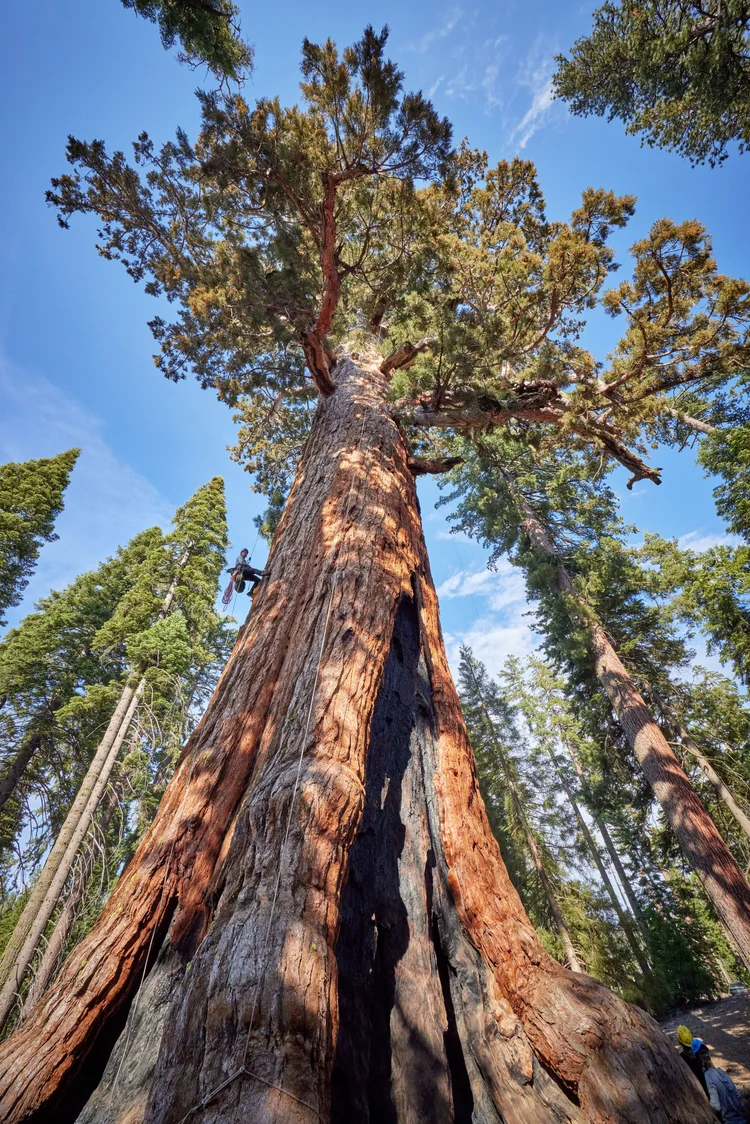
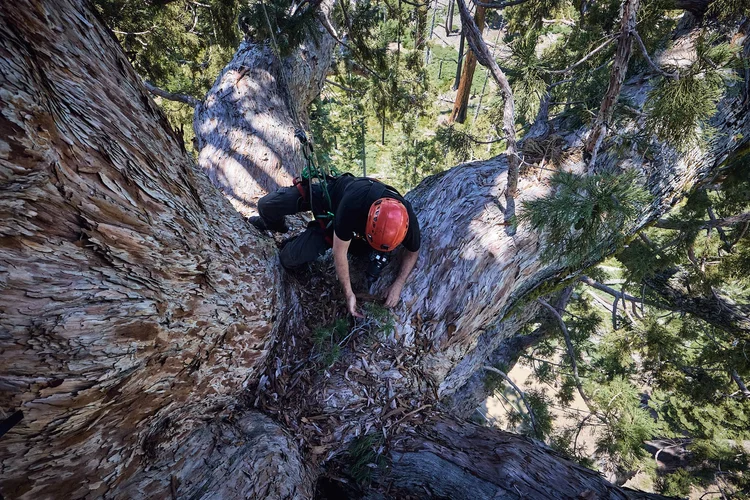
AFS Program Director Wendy Baxter descending from the historic Grizzly Giant. Photo by Anthony Ambrose. |
|
|
Over two days, our canopy research team rigged the tree, ascended into its massive crown, and performed a health assessment while documenting the experience through photography and videography. From the forest floor, the Grizzly Giant is awe-inspiring; from within the crown, its immense limbs are almost impossible to comprehend. One of its famous lower limbs proved even larger than it appears from the ground—its diameter was larger than some of our climbers are tall!
|
|
|
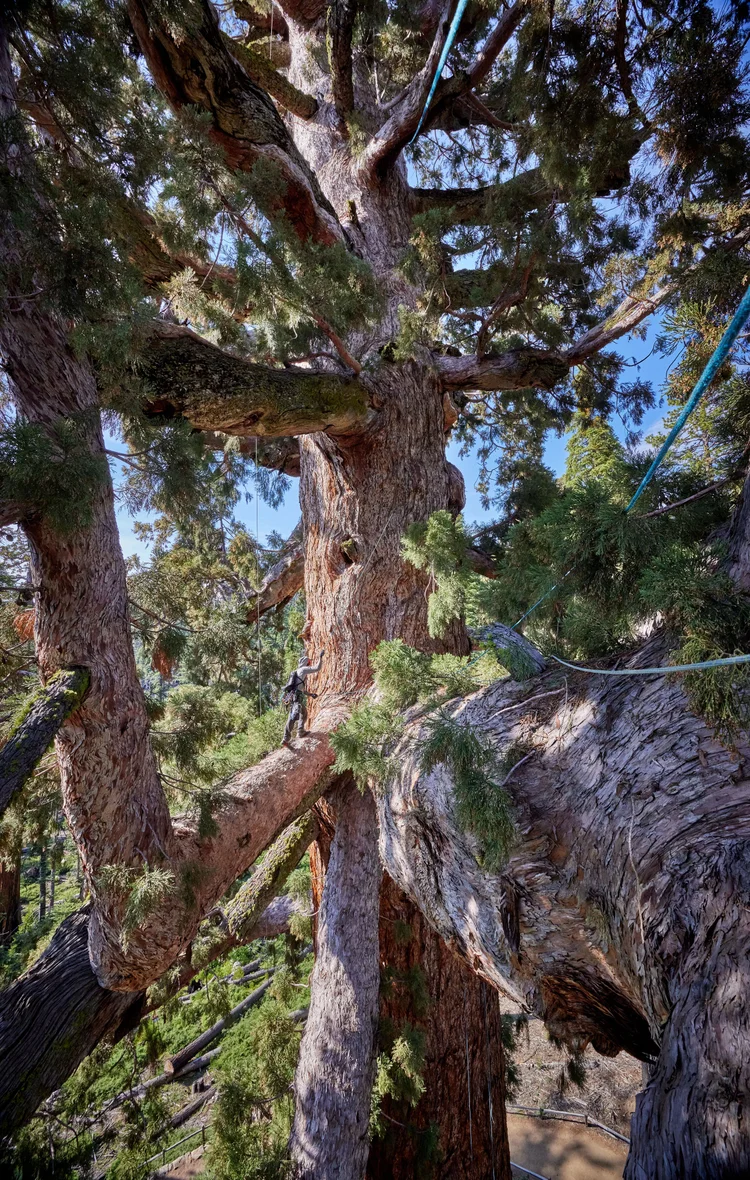
AFS Climber Lawrence Shultz standing on a large limb next to the iconic lower arm of the Grizzly Giant. Photo by Anthony Ambrose. |
|
|
Our assessment focused on four key indicators of tree health: water status, reproductive health, fire damage, and bark beetle activity. The results were encouraging. Water potential measurements indicated that the tree has adequate access to water, while an average cone crop suggested normal reproductive activity. Although approximately 70% of the base has been scarred by centuries of fire, the remaining living tissue appeared healthy and continues to support a vigorous crown. Researchers also documented evidence of bark beetles throughout the canopy. While beetle entry holes were common, especially on smaller branches, the tree was actively defending itself by producing resin that expelled invading beetles before they could establish colonies. No exit holes or evidence of successful beetle reproduction were observed, indicating that the beetles currently pose no threat to the tree's health.
|
|
|
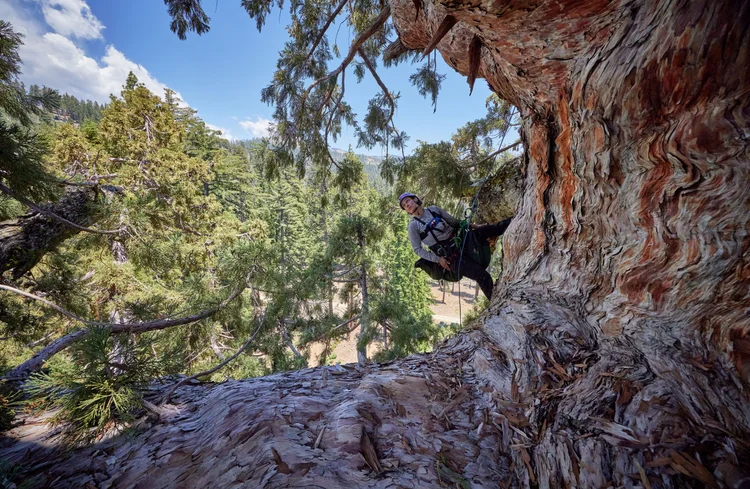
AFS Program Director Wendy Baxter inspecting a large limb for beetle activity. Photo by Anthony Ambrose. |
|
|
The climb revealed several discoveries beyond the health assessment. Two epiphytic sugar pines were found growing high in the Grizzly Giant's crown, and a cavity in the trunk was home to a family of Douglas squirrels. Observations like these serve as good reminders that ancient trees function as entire ecosystems, supporting the lives of countless other species of animals, plants, insects, and fungi. In addition to collecting valuable scientific data, the team captured an extensive library of photographs and video clips that will support future research, education, and outreach. Our first social media post about the climb reached thousands of people, reflecting the enduring fascination with giant sequoias and the importance of sharing the science behind their conservation.
|
|
|
AFS Executive Director Anthony Ambrose admiring an epiphytic sugar pine growing high in the canopy. Photo by Wendy Baxter. |
|
|
The Grizzly Giant has endured for nearly three millennia through fire, drought and storms. We are grateful to our partners for the opportunity to contribute another chapter to its remarkable story and to help ensure that this iconic tree remains healthy for generations to come. If you would like to learn more about the health inspection, you can watch the video about it here.
|
Honoring 250 years of American Independence: Building a Conservation Legacyby Erin Burk As the United States marks its 250th anniversary, we encounter an opportunity to reflect on one of the nation's greatest contributions to the world: the idea that natural places should be protected for future generations. Few places tell that story better than Yosemite's Mariposa Grove, where the Grizzly Giant has stood for around 3,000 years. Long before Yosemite became known to the rest of the world, the ancestors of seven Tribes called this landscape home. For thousands of years, they traveled through, lived within, and stewarded Mariposa Grove using practices such as cultural burning that maintained healthy forests and helped giant sequoias thrive. During the mid-1800s, colonization brought disease, violence, and forced displacement, devastating these communities and disrupting a stewardship tradition that had endured for millennia.
|
|
|
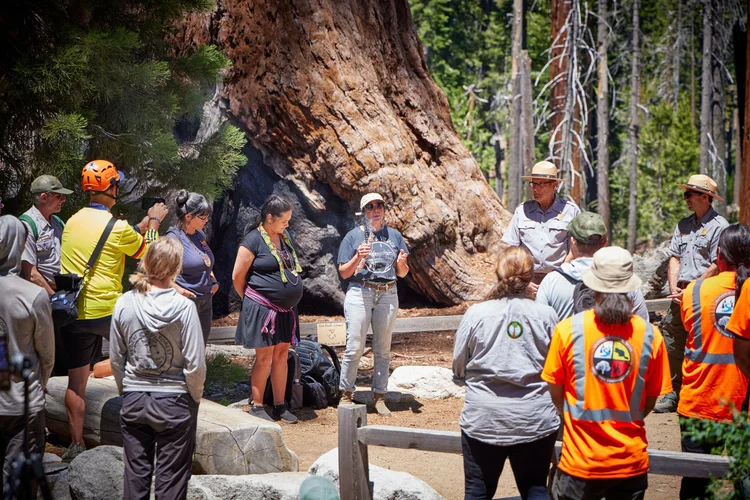
Traditionally Associated Tribal members lead a smudge ceremony with Yosemite National Park, Ancient Forest Society, and media partners before the Grizzly Giant climb. |
|
|
In the years that followed, paintings and photographs of Yosemite Valley and the immense giant sequoias of Mariposa Grove captured the public's attention. As concern grew that these remarkable trees could be lost to logging, President Abraham Lincoln signed the Yosemite Grant in 1864, protecting Yosemite Valley and Mariposa Grove as the nation's first federally protected public lands. That landmark decision came eight years before Yellowstone National Park and established a model that would eventually lead to the creation of the National Park Service (NPS) and the modern conservation movement. Here’s a little-known fun fact: before the modern arrowhead logo was adopted in 1952, the giant sequoia cone was the primary emblem used across all NPS uniforms and print materials. To this day, the sequoia tree is featured on the logo and the sequoia cone is still featured on all National Park Service ranger hats and belts—a direct nod to the species’ importance in the establishment of the National Park system. The story of stewardship in our National Parks continues to evolve in the present day. The NPS is now working alongside Tribal partners to restore cultural burning and other traditional stewardship practices to the landscapes where they originated. Through collaborative efforts like the recent tree health assessment of the Grizzly Giant, scientists, land managers, and Tribal communities are working together to ensure these ancient trees—and the knowledge that has sustained them for generations—remain part of America's story for centuries to come.
|
Support Forest ConservationLooking for a meaningful way to give? Supporting Ancient Forest Society—through a donation, membership, or merchandise purchase—is a way to connect friends and family to the protection of ancient trees. Your support helps advance research, expand seed collection efforts, and share knowledge about these ecosystems with a broader audience
|
|
Did someone forward this email to you and now you want to sign up?
|
|
|
|