$$PLAIN_TEXT_PREVIEW$$

View in Browser

Ancient Forest Society

Ancient Forest Society


Celebrating Indigenous People

by Wendy Baxter

Yesterday, our team at Ancient Forest Society (AFS) observed Indigenous People’s Day. Each year, on the second Monday in October, Indigenous Americans are celebrated for their deep histories and vibrant cultures. Our mission at AFS is to understand, protect and restore ancient forests. The importance of incorporating indigenous wisdom into forest management is becoming increasingly evident. Since the arrival of European settlers, the health of our forests began to decline with the displacement of Indigenous Americans which disrupted their long history of coexisting with and managing the ecosystems where they lived.

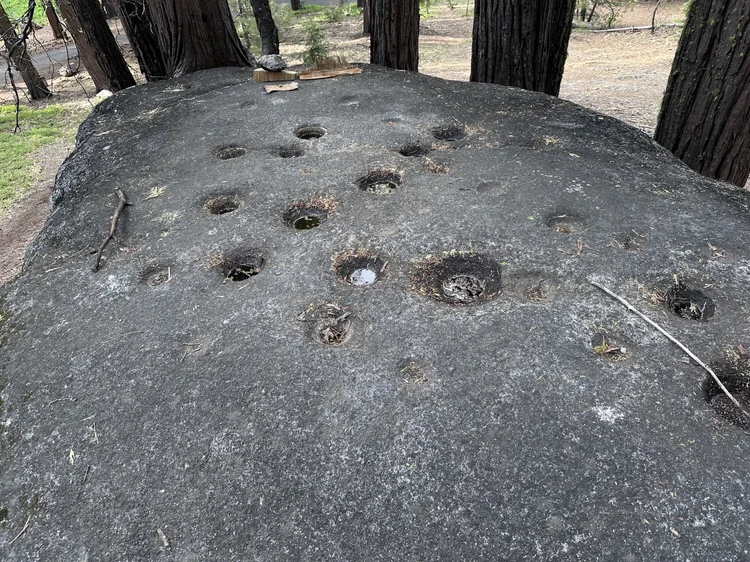
In the giant sequoia groves where we regularly work, there is visible evidence of the presence of Indigenous people. We often encounter bedrock mortars, where black oak acorns were ground as a critical food source. California black oak trees frequently grow among giant sequoias, typically in drier parts of the groves. We also find prehistoric bedrock basins, which are larger in size than bedrock mortars and predate current Indigenous tribes. Their purpose still remains a mystery, but the evidence of Indigenous activity in these areas remains. The absence of Indigenous management has resulted in serious consequences for California’s forests, and the giant sequoias in particular.

Bedrock mortars. Calaveras Big Trees State Park. Photo by Wendy Baxter.

The cultural burns that were conducted by Indigenous peoples and the lightning started fires that were allowed to burn shaped the giant sequoia groves. Prior to European settlement, large giant sequoia groves would generally experience fire every two years and individual trees about every 15 years. Cultural burning was practiced to increase visibility for safety and hunting and to promote the growth of critical food sources, medicines and basketry supplies, among other reasons. These burns also promoted the health of giant sequoia groves.

After prolonged fire exclusion, giant sequoia managers began reintroducing fire into giant sequoia groves in the 1960’s when it was apparent that surface and ladder fuels were building up to dangerous levels and there was essentially no giant sequoia regeneration. Frequent, low- to moderate-severity fire is critical in sequoia groves to decrease the intensity of future fires through reducing tree density, ladder fuels and surface fuels. Fire is also essential for sequoia regeneration because it stimulates the release of large numbers of giant sequoia seeds when the forest floor is primed for germination, exposing the mineral soil and releasing nutrients. Small patches of high severity fire also create gaps in the forest that provide ample light for newly established seedlings to grow. 

A prescribed fire in Giant Forest in 2022. Sequoia National Park. Photo by Anthony Ambrose.

While admirable progress has been made reintroducing fire to the giant sequoias, the backlog of acreage needing treatment in an era of rapid climate change resulted in the death of 17.6% of all mature sequoias since 1984. This is a staggering loss. Recent research conducted by Dan Dixon and others found that prescribed fires that took place within ten years of a wildfire increased the chance of giant sequoia survival by four times. This is a testament to the wisdom of the Indigenous communities that promoted the health of sequoia groves for thousands of years. As we celebrate Indigenous communities in California and across the country, we look forward to a future where more of their knowledge is incorporated into our everyday lives.

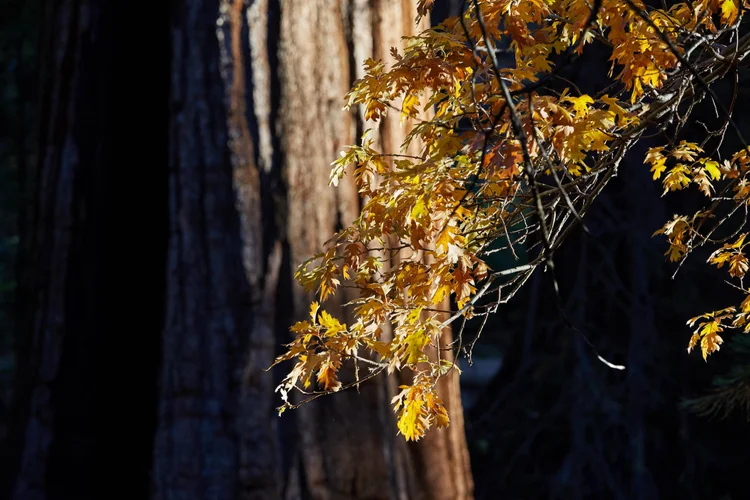
California black oak leaves with a sequoia in the background in Mariposa Grove. Yosemite National Park. Photo by Wendy Baxter.

 SUPPORT OUR WORK 
 

Enjoying our Backyard

by Wendy Baxter

AFS is headquartered in South Lake Tahoe, a haven for outdoor activities. One underappreciated recreational activity is tree climbing. Many people remember climbing trees as kids but wouldn’t consider it as a fun way to spend an afternoon. Climbing a tree can be both enjoyable and educational and can be done with minimal impact to the tree. Being in a tree provides a view from a different perspective and an opportunity to experience the critical habitat and food source for countless animals. 

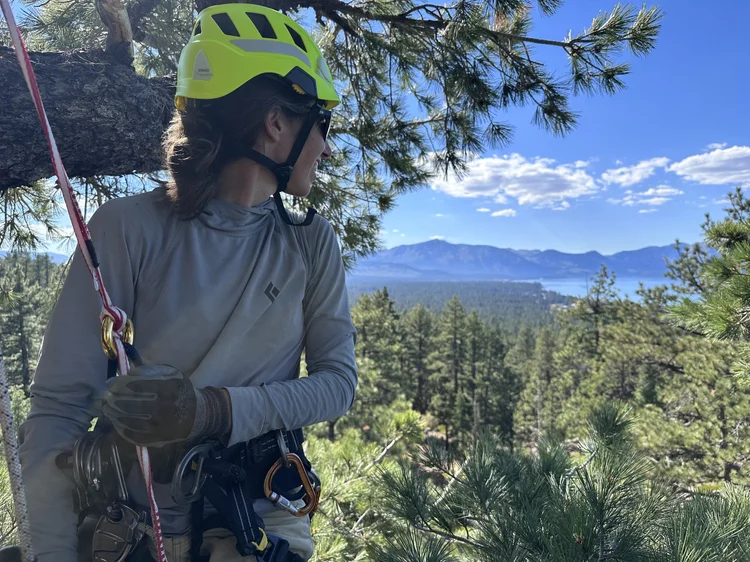
Earlier this month, we offered a free climbing event for local stakeholders on the California side of Van Sickle Bi-State Park, a California Tahoe Conservancy-owned property. We selected a Jeffery pine and a sugar pine to climb and spent the day climbing with folks from the US Forest Service and Lake Tahoe Community College. Participants were provided with climbing equipment and guidance as they climbed to the top of a tree to take in stunning views of Lake Tahoe. 

We plan to continue to offer opportunities like this in our own backyard so stay tuned!

A local stakeholder enjoying the view of Lake Tahoe from a sugar pine tree. Van Sickle Bi-State Park. Photo by Wendy Baxter.


Sustain Our Work Year-Round

While much of our work happens in the field, maintaining long-term research and conservation programs requires consistent support throughout the year. Membership provides a reliable foundation that allows us to plan ahead, retain skilled staff, and respond to emerging needs in the forests we study.

By becoming a member of Ancient Forest Society, you help ensure continuity in our work—from data collection and analysis to outreach and education.

 BECOME A MEMBER 
 

Did someone forward this email to you and now you want to sign up?

 JOIN OUR MAILING LIST 

Ancient Forest Society

This e-mail was sent to you by Ancient Forest Society. To ensure delivery to your inbox (not bulk or junk folders), please add our e-mail address, trees@ancientforestsociety.org, to your address book.

Ancient Forest Society, 870 Emerald Bay Rd., Suite 110, South Lake Tahoe, CA 96150, USA

Powered by Squarespace

Unsubscribe